

Herbs that survive winter in the UK are the ones whose roots stay out of standing water, because wet kills more herbs than cold. Rosemary, thyme, sage, chives, parsley and mint will all come through a Shropshire winter outdoors, provided the ground around them drains.
Most guides start with a list of hardy herbs and a warning about frost. We start with the ground, because that is where a winter herb bed succeeds or fails long before you choose a single plant.
If your garden sits on clay, which holds winter rain for weeks, read our guide to improving clay soil organically alongside this one.
Why Wet Kills More Herbs than Cold Does
Rosemary, thyme and sage evolved on thin, stony Mediterranean hillsides where winter rain runs straight through the soil and away. Their roots handle a hard frost well, provided the soil around them holds air as well as water.
In heavy, waterlogged ground the air spaces fill with water, the roots cannot breathe and rot follows. A rosemary bush can shrug off a sharp frost on a dry bank and still die during a mild, wet winter on clay.
Herbs written off as frost damage in spring have often rotted at the root in January, long before the plant showed trouble. Look for yellowing lower leaves, blackened stems at the base and a plant that rocks loose when you touch it.
This is also why wrapping rosemary and sage in plastic at the first frost does more harm than good. Plastic traps condensation against the stems and leaves, which invites the grey mould and rot you wanted to prevent. For a young plant in a hard cold spell, use breathable horticultural fleece and remove it once the frost lifts.
To test a spot before you plant, dig a hole about 30 cm deep after heavy rain and check it the next morning. Water still standing in the bottom tells you the herbs need lifting above that ground rather than planting into it.
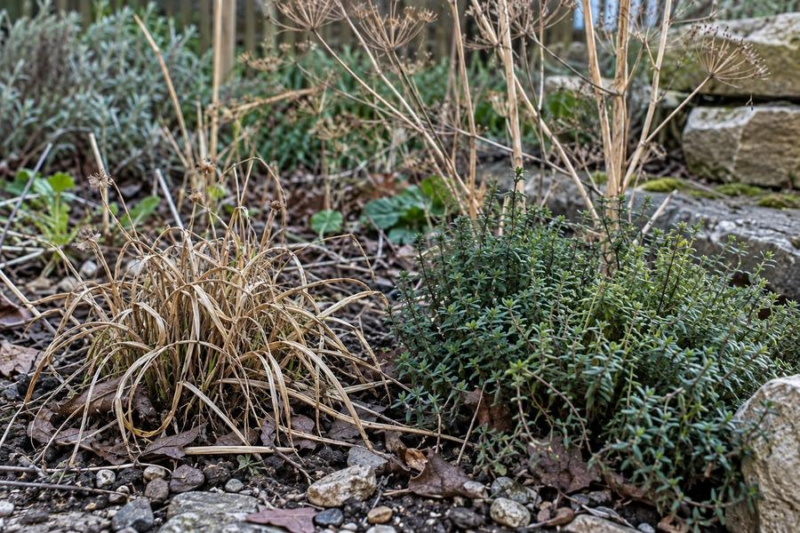
Evergreen Herbs That Survive Winter in the UK
Rosemary, thyme, sage, winter savory and bay keep their leaves through winter, which makes them the herbs you can pick from November to March. Parsley belongs on the list too, because it keeps producing leaves in most winters, although it prefers moister soil than the woody herbs.
Thyme suffers fastest in wet ground, especially lemon thyme and the low creeping varieties that sit flat on cold, damp soil. Sage copes better, while bay is hardy in sheltered gardens and needs fleece only when young and exposed to the hardest frosts.
Picking Lightly in Short Days
Late November leaves evergreen herbs almost no growing time, because the days are too short and cold for new shoots. Take a few sprigs at a time from several plants and leave at least two-thirds of each one standing until spring.
Do not cut woody herbs back hard before April, as fresh cuts on rosemary, sage and thyme heal slowly in the cold.
Herbs That Disappear and Come Back
Chives, mint, French tarragon, lovage, fennel and oregano die down to their roots in winter and grow back from the crown in spring.
French tarragon is the one to watch, because it tolerates cold well enough but often rots in heavy, wet ground over winter. Give it the sharpest drainage you have or lift a clump into a gritty pot and keep it in a cold porch until March.
Leave the Dead Growth Standing
Resist the urge to tidy these herbs now, because the dead stems and leaves sit over the crown like a loose winter blanket. They also mark where each dormant crown sits, which stops you digging into one by mistake.
The hollow stems of fennel and lovage give overwintering insects such as ladybirds and solitary bees somewhere dry to spend the cold months. Cut the old growth back to the base in late February or early March, when new shoots start to show at the crown.
Mint needs a rule of its own, because its running roots will spread through any bed that gives them room. Give it a pot or separate section with less grit in the compost, as it likes more moisture than thyme.
Tender Herbs to Bring Indoors or Replace
Basil, coriander and dill are not among the herbs that survive winter in the UK outdoors, whatever you do about drainage. Basil is tender and dies at the first frost, while coriander and dill are annuals that finish their life cycle within a season. Treat all of them as summer crops and sow fresh seed in spring in biodegradable coir pots on a warm windowsill.
Check every pot for aphids and whitefly before it comes inside, as pests that arrive on a herb soon move on to your houseplants. Our guide to getting rid of aphids organically covers what to do if you find colonies under the leaves.
Building Drainage into a Winter Herb Bed
Good drainage comes from four changes that work together to move water away from the roots, all of which you can make this month.
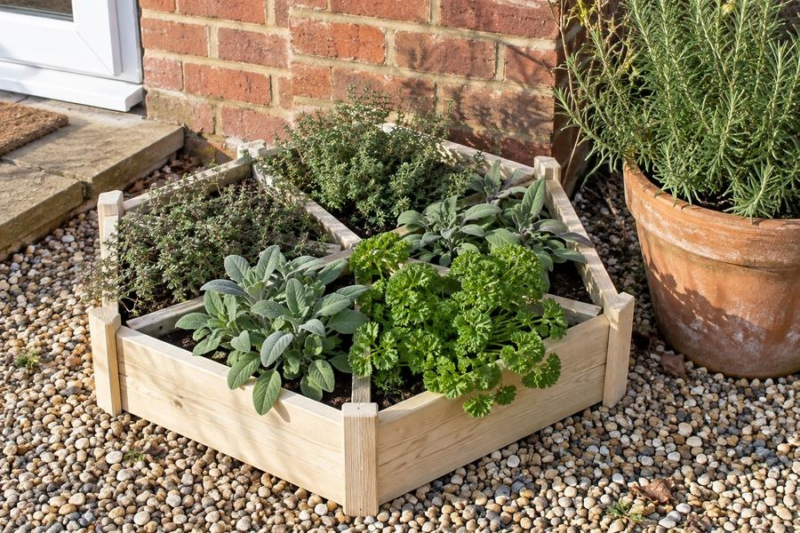
Raise the Roots above Wet Ground
A raised planter lifts the roots clear of the wettest soil, which lets winter rain drain through the compost and away from the crown. Our Herb Wheel Planter stands about 25 cm high, with divided sections that keep each herb in its own compost.
It carries a twenty-year guarantee against rot, which saves buying and binning several cheap planters over the same years. The FSC (Forest Stewardship Council) certify its pine, which means the timber comes from responsibly managed, renewable forests.
At about 25 cm high, the wheel is shallower than the 30 cm minimum the RHS recommend for rosemary in a container. Give rosemary a spot in the ground or a large pot of its own, with the same gritty compost described below. Fill the wheel with thyme, sage, chives and parsley, keeping one section for mint so that its roots stay where you planted them.
Set it up by the kitchen door now and plant pot-grown thyme and sage on any mild, dry day before December.
Mix Grit into Peat-Free Compost
Mix horticultural grit into peat-free compost at up to 25 per cent by volume, the ratio the RHS give for rosemary. Our Peat Free Coir Compost Discs expand in water into a light, open base that blends easily with grit.
Coir holds plenty of moisture on its own, which is why the grit matters for the woody herbs. Choosing peat-free keeps peat bogs in the ground, where they store carbon and shelter wildlife.
Herbs That Survive Winter in the UK on Heavy Clay
On heavy clay, a raised planter is the quickest fix for this winter, while improving the soil itself is a longer job. For rosemary planted in the ground, build a low mound of soil and grit so that the crown sits above the surrounding level.
Our guide on how to improve soil before winter covers the borders around your herbs, including what to add and when.
Finish with Gravel and a Sunny Wall
Spread a layer of gravel around the base of each woody herb, which keeps the crown dry and stops soil splashing onto the leaves. Avoid a thick mulch of compost or bark around thyme and sage this late in the year, because it holds wet against the stems.
Stand the planter against a south-facing or west-facing wall, where the brickwork gives back warmth and the eaves keep off some rain. Lift separate pots onto feet or bricks, as a pot standing in a puddle undoes all your work on the compost.
Questions about Overwintering Herbs
Which Herbs Survive Winter Outside in the UK?
Rosemary, thyme, sage, winter savory, bay and parsley stay green outside, while chives, mint, oregano and lovage die back and return in spring. All of them come through a UK winter far more reliably in free-draining soil than in heavy, wet ground.
Can Rosemary Stay Outside in Winter?
Yes, rosemary stays outside all winter in most UK gardens, provided its roots never sit in wet soil. Plant it in a sunny, raised spot with grit in the soil or in a pot at least 30 cm wide and deep.
Should I Cut Back Herbs in Autumn?
Hold off with woody herbs until spring, because new cuts on rosemary, sage and thyme are slow to heal in cold, damp weather. Leave the dead growth on chives and mint until late February, when it has finished protecting the crown through winter.
What Makes a Good Herb Planter for Winter?
A good winter herb planter lifts the roots above wet ground, drains freely and lasts through years of rain without rotting. Divided sections help too, because they let you give mint a damper mix and the woody herbs a gritty one.
Start Your Winter Herb Bed with the Ground
The herbs that survive winter in the UK are the ones planted in ground that drains, which is why drainage comes before the plant list. Our Herb Wheel Planter is in stock now and holds thyme, sage, chives and parsley in gritty, peat-free compost right by your kitchen door.
Fill it with our Peat Free Coir Compost Discs and grit, then use our companion planting guide to choose its summer neighbours. When the parsley flowers in its second summer, our guide to saving seeds in the garden shows how to collect its seed for sowing.
< Back to all posts