

Companion planting in the UK is one of the most effective tools an experienced gardener has and one of the most underused. Done well, it reduces pest pressure, improves soil health and can measurably increase yields, all without reaching for a chemical spray.
This is not a beginner’s primer. If you already know your way around a kitchen garden, this guide will sharpen your approach, introduce a few combinations that genuinely surprise, and help you make the most of what you can still sow this June.
Why Companion Planting UK Gardeners Should Take Seriously
The science behind companion planting is more robust than it was even a decade ago. Research published through the Royal Horticultural Society confirms that strategic planting combinations can disrupt pest cycles, attract beneficial insects and improve the efficiency of nutrient uptake in the surrounding soil.
Three mechanisms explain most of the benefit. First, scent confusion, aromatic plants mask the chemical signals that pests use to locate their preferred host. Second, predator attraction – certain flowering plants draw in hoverflies, lacewings and parasitic wasps that predate aphids and other common garden pests. Third, nitrogen fixation – legumes such as beans and peas fix atmospheric nitrogen into the soil, feeding neighbouring plants directly.
Understanding which mechanism applies to a given pairing is what separates a gardener who scatters a few marigolds around hopefully from one who builds a genuinely resilient planting system.
The Best Companion Planting Combinations
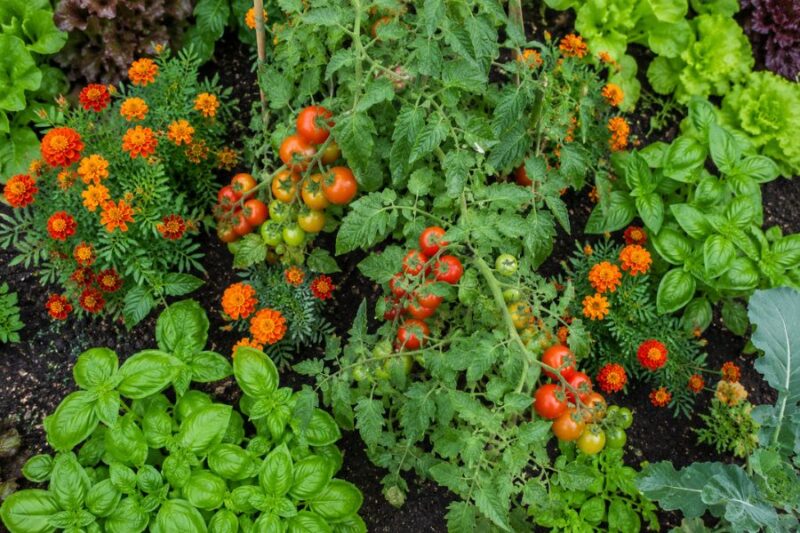
Tomatoes, Basil and Marigolds
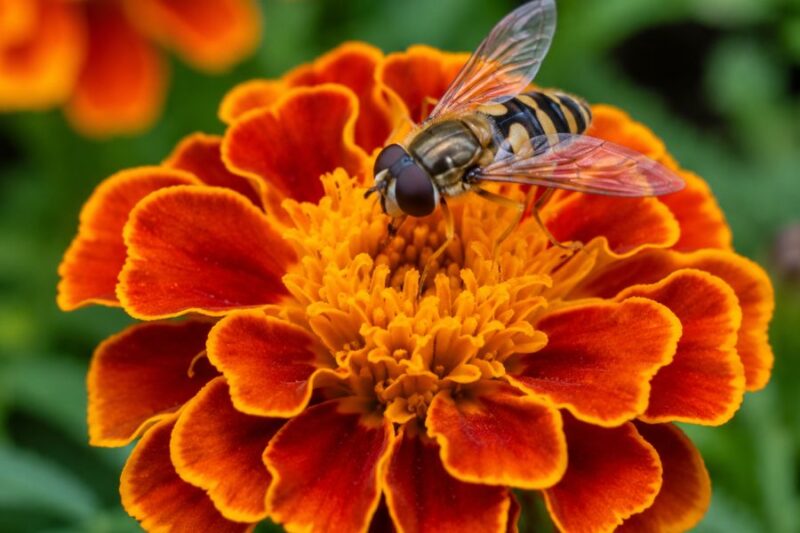
This is the pairing most gardeners know and it works. Basil is thought to repel thrips and aphids while improving the flavour of fruit when grown in close proximity – though the flavour claim remains contested, the pest deterrence is well documented. French marigolds are arguably the most valuable companion in any kitchen garden: their root secretions suppress soil nematodes and their flowers attract hoverflies that prey on aphids throughout the season.
If you are not already growing French marigolds alongside your tomatoes, that changes now. French marigold seeds from The Natural Gardener are the easiest, most cost-effective entry point into companion planting for any gardener.
Carrots and Onions
Carrot fly and onion fly are both deterred by the scent of the other’s companion. Plant rows of carrots and onions in alternating strips and each crop masks the chemical cues the other’s pest relies on. It is a clean, simple arrangement with a strong evidence base and it works in even the smallest raised bed.
Brassicas and Dill
Dill attracts parasitic wasps that target the caterpillars of cabbage white butterflies – one of the most persistent brassica pests in UK gardens. Allowing dill to flower near cabbages, kale and Brussels sprouts introduces a natural predator layer that costs nothing once established. Avoid planting dill near carrots, however, as the two inhibit each other’s growth.
Beans and Nasturtiums
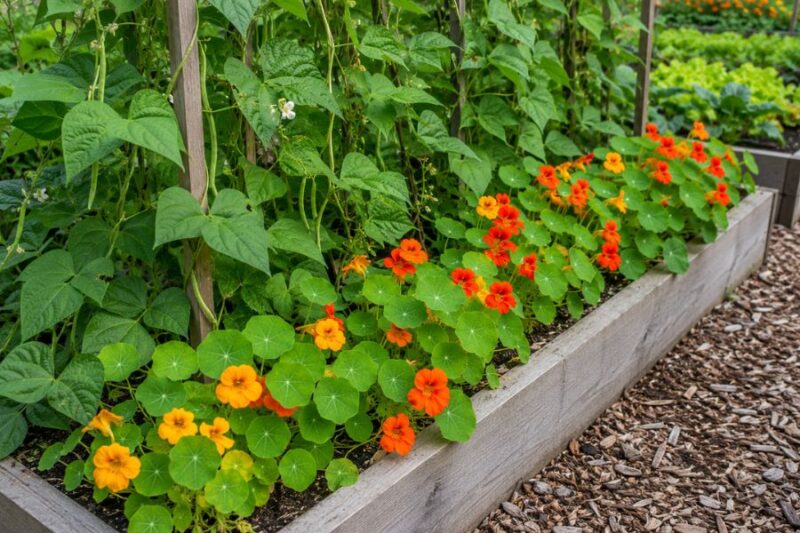
Nasturtiums are a classic sacrificial companion. Blackfly, the most common aphid pest on broad and French beans, strongly prefer nasturtiums. Plant them at the perimeter of your bean rows and the aphids colonise the nasturtium first, keeping the bean crop cleaner. For heavier infestations, organic neem oil applied to the nasturtiums breaks the cycle without harming the surrounding planting.
The Three Sisters: A Method Worth Revisiting
The Three Sisters – sweetcorn, climbing beans and squash, a traditional Native American growing system that functions as a near-perfect companion planting model. Sweetcorn provides vertical structure for the beans to climb. The beans fix nitrogen into the soil, feeding the nitrogen-hungry corn and squash. The squash spreads low across the ground, suppressing weeds and retaining soil moisture through its broad leaf canopy.
For UK gardeners, the Three Sisters works best when sweetcorn is started under cover in May and planted out in a block formation (not rows) once the risk of frost has passed. Squash varieties with a spreading habit work better than bush types. The system genuinely reduces your workload once established and it demonstrates precisely why companion planting is a productive strategy rather than a decorative one.
Herbs as Companions: Rosemary, Mint and Chives
Herbs are among the most practical companions in a UK garden because they earn their space twice, as deterrents and as ingredients. Rosemary planted near brassicas deters cabbage white butterflies through its strong volatile oils. Mint suppresses aphids and ants when grown near vulnerable crops, though it requires containment or it will dominate the bed. Chives planted near roses and carrots deter aphids reliably and are one of the most evidence-backed herbal companions available.
These are plants you likely already grow. Repositioning them within your beds, rather than clustering them in a separate herb garden, costs nothing and can make a meaningful difference to pest pressure across the season.
Plants to Avoid Planting Together
Companion planting is as much about separation as it is about combination. Tomatoes and potatoes are in the same family (Solanaceae) and share diseases including blight – planting them close to each other accelerates the spread of infection between crops. Keep them at opposite ends of the growing space.
Beans and alliums – onions, garlic, leeks and chives inhibit each other’s growth. The mechanisms are not fully understood but the negative interaction is consistent enough that most experienced growers treat it as established practice. If you are companion planting for aphid control near beans, use nasturtiums rather than alliums.
If aphids are already a problem in your garden, our guide to controlling aphids naturally covers biological and organic options in more detail.
What to Plant Now: Companion Planting for June
June is not too late to establish most companion combinations for this season. French marigolds can be planted out now alongside tomatoes, courgettes and peppers – they will establish quickly in warm soil and begin attracting hoverflies within a few weeks. Nasturtiums sown direct in June will germinate fast and be in flower by mid-July, giving several weeks of sacrificial cover for your bean crop.
If you are sowing a new area or want to build long-term insect diversity across your plot, British meadow wildflower seeds establish a permanent habitat for the predatory insects that make companion planting work at scale. A small patch – even a square metre at the plot boundary – meaningfully increases the population of beneficial insects across your whole growing area.
For soil that needs support before companion planting can deliver its full benefit, mycorrhizal fungi improves root development and nutrient uptake in a way that underpins every other growing system you put in place.
Frequently Asked Questions
Does companion planting actually work?
The evidence is strong for specific combinations. The RHS and independent university trials confirm that marigolds suppress nematodes, alliums deter carrot fly and sacrificial plants such as nasturtiums genuinely redirect aphid pressure. Results vary by scale and context, but the core mechanisms are well established.
What should you not plant together in a UK vegetable garden?
The combinations to avoid consistently include tomatoes with potatoes (shared disease risk), beans with alliums (growth inhibition) and fennel with most vegetables – fennel is allelopathic and suppresses the growth of many neighbouring plants.
What is the Three Sisters planting method?
The Three Sisters combines sweetcorn, climbing beans and squash in a mutually beneficial system: the corn supports the beans, the beans fix nitrogen into the soil and the squash shades the ground to retain moisture and suppress weeds. It is one of the most documented companion planting systems in agricultural history.
Which herbs are best for companion planting in the UK?
Rosemary, chives and mint are the most practical choices for UK gardens. Rosemary deters cabbage white butterflies near brassicas, chives deter aphids near roses and carrots, and mint suppresses ant activity – though it should always be planted in a container to prevent it spreading.
Ready to Start?
Companion planting in the UK delivers the most consistent results when you start with proven, reliable plants. French marigold seeds remain the single most versatile companion plant available to UK gardeners – easy to establish, effective across a wide range of crops and in flower throughout the season when you need them most. Browse the full pest and weed control range at The Natural Gardener to build a complete chemical-free growing system for the season ahead.
< Back to all posts