

How to improve soil before winter is one of the most important questions any gardener can ask in September, because the work you do now pays dividends for the next twelve months. Autumn is not the end of the growing season. It is the most productive feeding window of the year and most gardeners miss it entirely.
Why Autumn Is the Best Time to Feed Your Soil
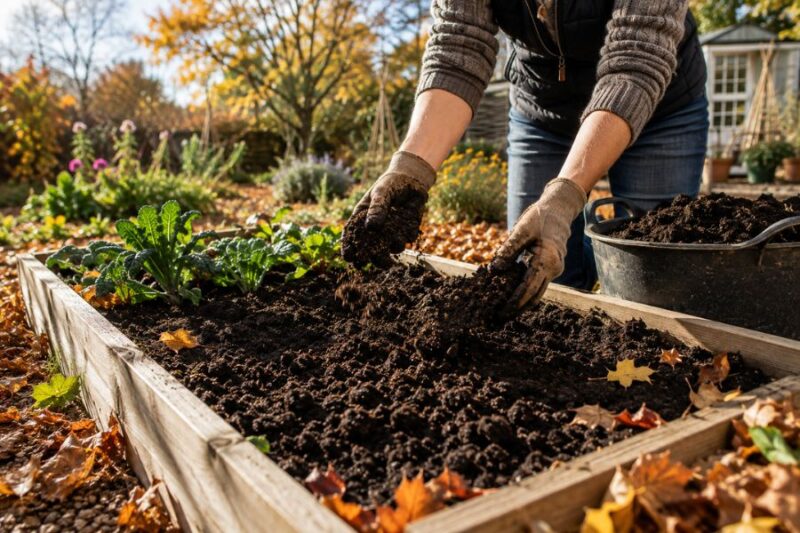
The soil is still warm in September and October. Microbial activity is high, earthworms are close to the surface and the network of fungi threading through your beds is actively processing organic matter. Anything you add right now gets broken down and integrated long before spring planting begins.
Compare this to feeding in spring, when the soil is cold and often waterlogged. Nutrients leach away before roots can reach them. In autumn, everything you add in September is working all winter, slowly and steadily, building the structure and fertility your plants will draw on next year. That is the fundamental case for acting now rather than waiting.
What Happens to Soil Over Winter
Freeze-thaw cycles do something that gardeners rarely appreciate: they physically break down organic matter. As water in the soil freezes and expands, it fragments clumps of compost and plant debris into finer particles that microbes can digest far more easily. This means that material you add before the first frost does not just sit there. It enters a slow but constant process of decomposition that continues even in cold conditions and accelerates sharply the moment temperatures rise in March.
Heavy rain also plays a role. Bare, unamended soil loses topsoil to run-off and suffers compaction from rain impact. Soil that has been mulched or covered with a green manure holds its structure and retains far more of its nutrient content through to spring.
The Autumn Order of Additions
The sequence in which you layer soil amendments matters. Adding them in the wrong order, or all at once without thought, reduces their individual effect.
Start With Compost
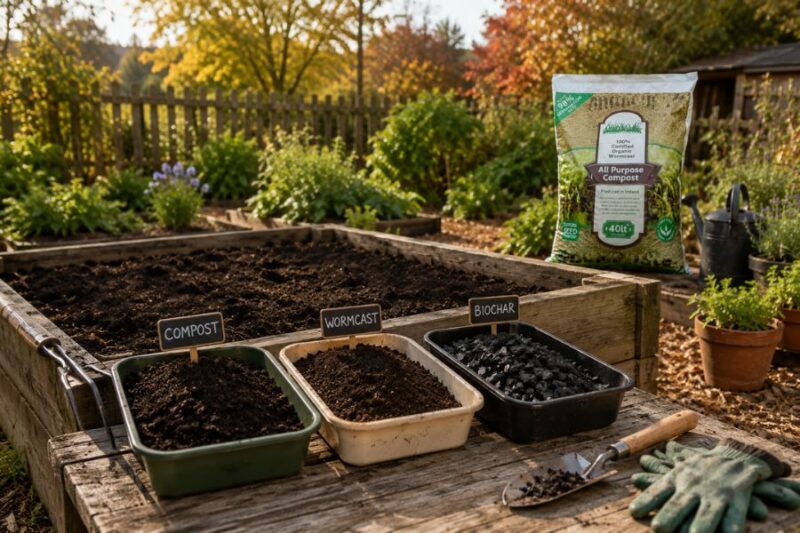
Begin with a generous layer of well-rotted organic compost across all cleared beds. Natural Gardener’s Organic Compost is a peat-free, multi-purpose blend that feeds the soil food web immediately on contact. Spread it two to three inches deep across the surface. Do not dig it in.
Add Wormcast on Top
Once the compost layer is down, apply a dressing of wormcast. Biohumus Wormcompost is one of the most concentrated natural fertilisers available. A thin layer across the compost dramatically increases microbial diversity and adds plant-available nutrients that persist through winter. Wormcast also improves soil structure by binding particles together, which reduces compaction and improves drainage.
Finish With Biochar
The final layer is biochar, and this is where the long-term thinking kicks in. Biochar is a stable form of carbon that does not break down in the way compost does. Instead, it creates a permanent habitat for beneficial microbes and holds nutrients within reach of plant roots. Applied on top of the wormcast, it locks in everything below it and provides a slow-release benefit that compounds over years, not just one season. Scientists at the European Biochar Certificate have documented its role in improving water retention and cation exchange capacity in temperate soils.
Green Manures: Protecting Ground You Are Not Planting
Cleared beds that will sit empty over winter need a cover crop. Leaving soil bare exposes it to erosion, compaction and nutrient loss. Green manures solve all three problems at once.
Sow a fast-establishing green manure such as field beans, winter rye or phacelia on any empty ground after clearing summer crops. These plants protect the soil surface from rain impact, their roots hold the soil matrix together and, when cut down in late winter, they add a flush of nitrogen-rich green material that feeds the next round of microbial activity. Think of them as a living mulch. They are especially useful on vegetable beds that will not be planted until April or May.
Mulching Before the First Frost
For beds that already have perennials, shrubs or fruit bushes, mulching is the priority. A mulch layer of three to four inches insulates the root zone, suppresses winter weeds and, as it slowly breaks down, adds organic matter to the surface of the soil. This connects directly to the no-dig gardening approach, which treats the soil surface as something to build up rather than turn over.
Leaf mould, wood chip and composted bark all work well as mulching materials. Apply before the first hard frost, pulling the mulch a few centimetres back from plant stems to avoid rot. The goal is to cover as much bare soil as possible. Bare soil in winter is a missed opportunity, not a tidy garden.
Why You Should Not Dig in Autumn
Digging in autumn is one of the most common mistakes in the vegetable garden. Every time you turn the soil, you destroy the fungal networks that have spent months threading through it. You also bring weed seeds to the surface, expose soil microbes to lethal cold and break apart the structure that compaction over winter will then harden in the wrong configuration. Resist the urge. Leave the layers you have applied on top and let the worms do the work of drawing them downwards. This is the central principle behind the no-dig method and the science behind it is well established.
For more on how soil biology supports healthy growth without chemical intervention, the October gardening mulching and composting guide covers seasonal technique in more detail.
Seaweed Granules: the Often-Overlooked Autumn Feed
One addition worth including at this point in the season is seaweed granules. Seaweed is rich in trace elements, natural growth hormones and alginic acid, which improves soil structure by encouraging soil particles to clump together. Scatter a light dressing across your beds after mulching or work it into the top inch of compost before laying the mulch layer. It acts as a slow tonic that complements everything else you have added, and it feeds the soil biology that will be processing your compost all winter.
Seaweed granules also support root development in perennials going into dormancy, helping them establish stronger anchor roots that will support better growth when they break dormancy in spring.
Frequently Asked Questions
What should I add to my soil before winter?
Apply a layered combination of well-rotted compost, wormcast and biochar to cleared beds in autumn. Follow this with a mulch layer of three to four inches to protect soil through frost and rain. Seaweed granules added at this stage also support the soil biology working through winter.
Should I dig my garden in autumn?
No. Digging in autumn breaks apart the fungal networks in your soil, brings weed seeds to the surface and exposes beneficial microbes to damaging cold. Leave applied organic matter on the surface and let earthworms integrate it naturally through winter.
What is the best green manure for winter?
Field beans, winter rye and phacelia are all well-suited to UK winters. Sow them on cleared ground after summer crops are removed. They protect soil from erosion and compaction and their roots hold the soil structure together until you cut them down in late winter.
Does soil improve over winter if I feed it in autumn?
Yes. Freeze-thaw cycles physically break down organic matter and make it easier for microbes to process. Soil that has been fed with compost, wormcast and biochar in autumn will be measurably more fertile and better structured by the time planting begins in spring., ## Get Your Soil Ready Now
Knowing how to improve soil before winter is one thing. Acting on it in September and October, while the soil is still warm and the biology is active, is what separates a struggling spring garden from one that hits the ground running. Everything you add now is working quietly through the coldest months, so that when March arrives, your soil is ready before you are.
Browse our full range of organic soil enhancers, including biochar, wormcompost and peat-free organic compost and build your autumn feeding plan today. If you are also thinking about broader sustainable growing practices, the eco-friendly gardening tips guide is a practical place to start.
< Back to all posts