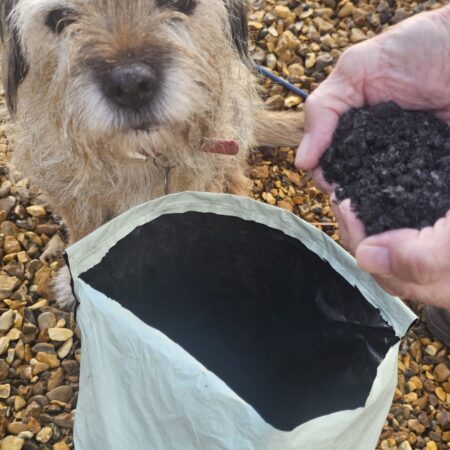
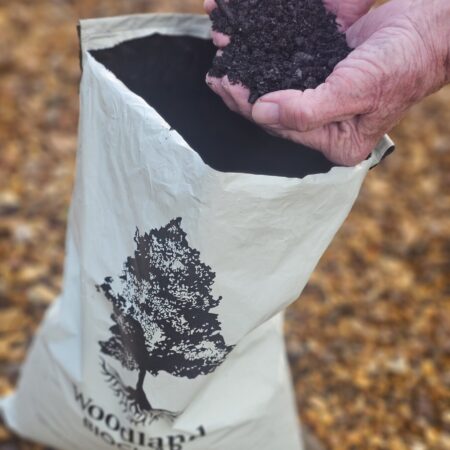
Biochar: what is it?
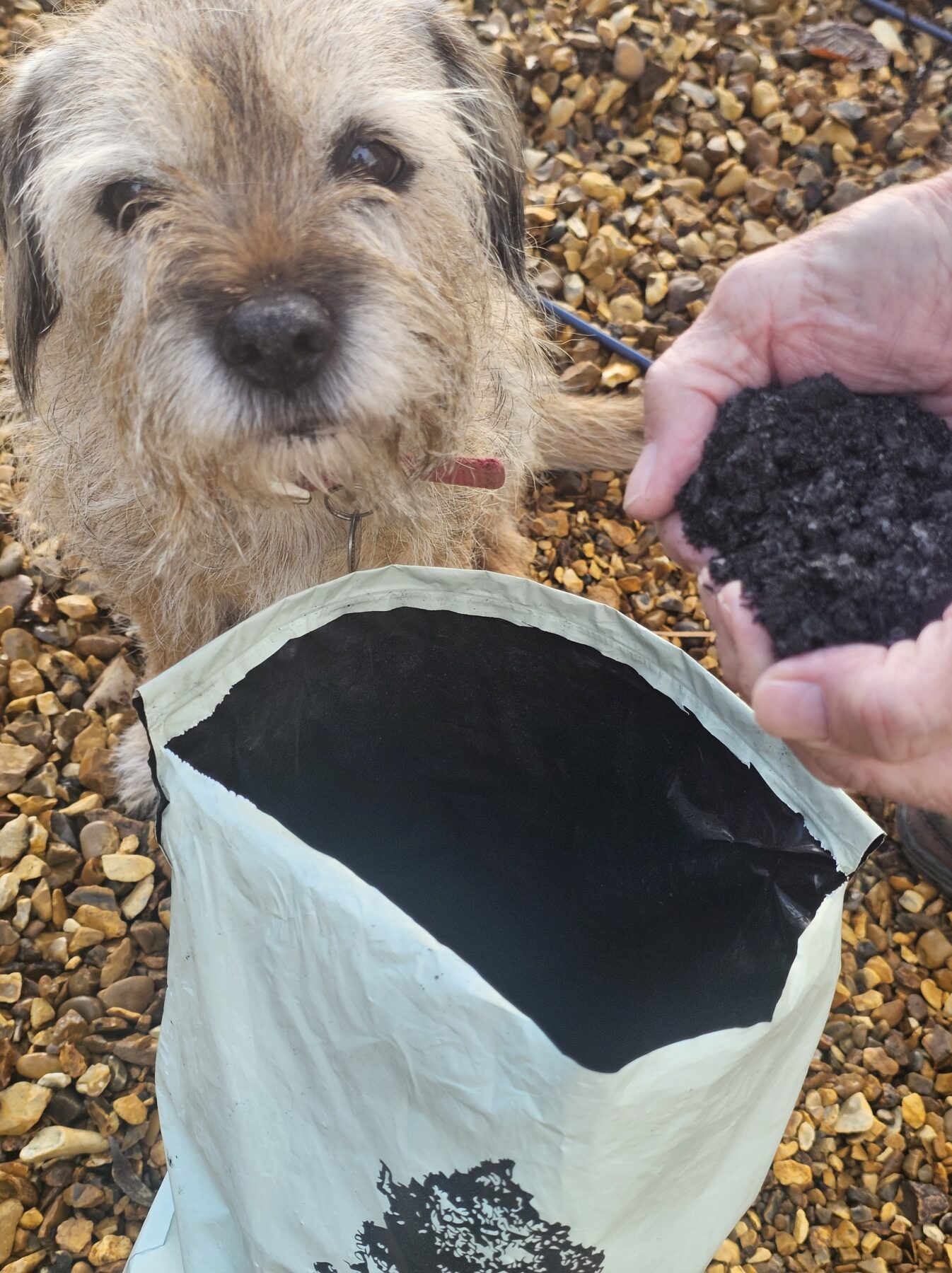
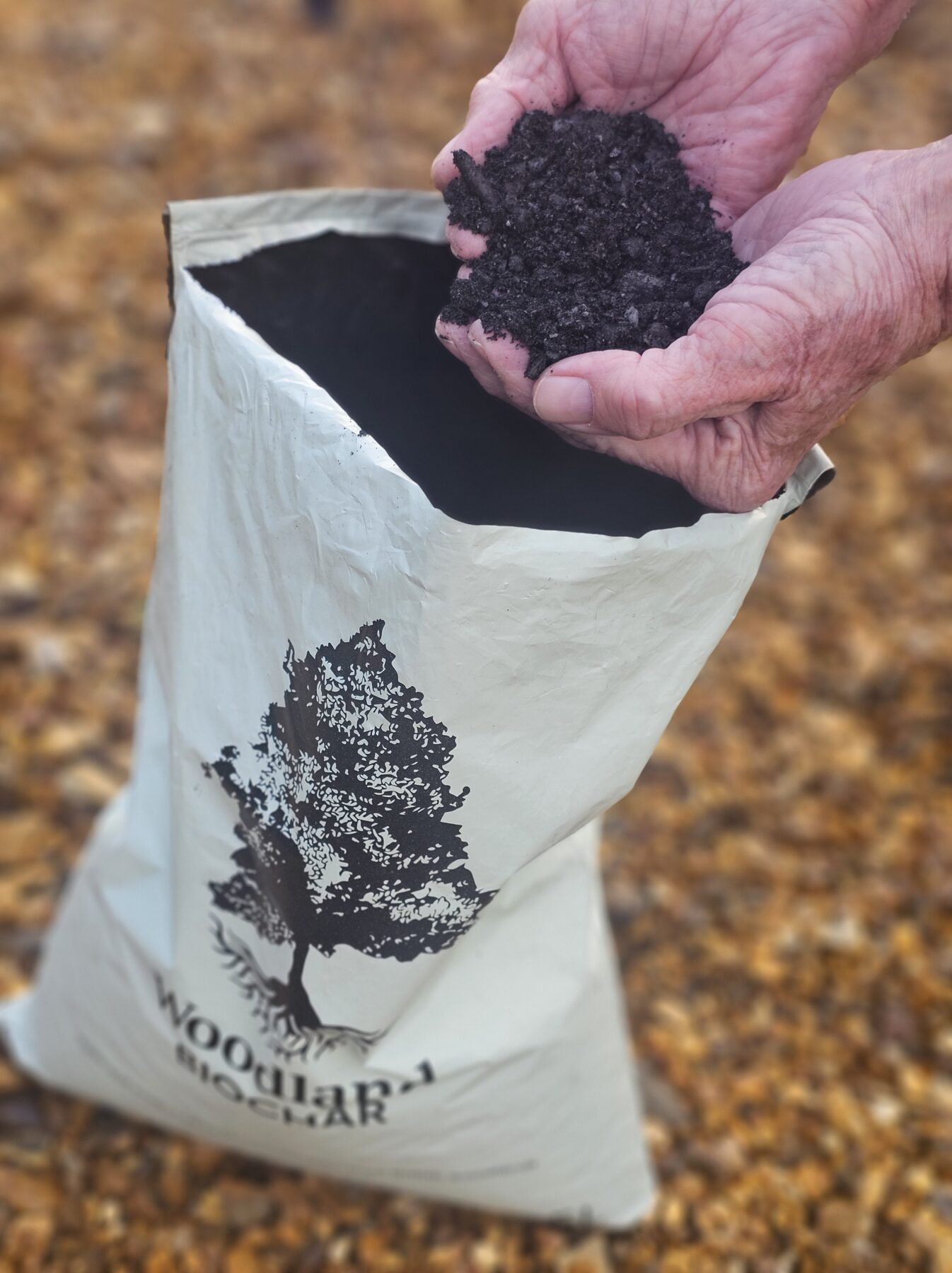
Many people have heard of it but may not have used it. Biochar looks like charcoal but differs in that it has a very strong structure of pure carbon, staying in the soil for a very long time. Its use in cultivation has ancient roots, such as in Terra Preta in the Amazon rainforest.
By heating organic waste, such as wood, without air (a process called pyrolysis), a strong, porous, honeycomb-like structure, is created. The microbes in the soil can’t degrade it and it remains in the soil, locking atmospheric carbon below ground for thousands of years.
How does biochar improve the soil?
Biochar is not a fertiliser in itself but creates an environment for soil biology to thrive. It manages aeration, moisture and microbial activity
- Think of biochar like a sponge, with its many channels, holding moisture in drought, but also allowing drainage.
- Its strong, open structure reduces soil compaction
- Its pure carbon structure, with a huge surface area, attracts and holds onto nutrients in the soil.
- The pores provide a home with a readily available food supply for the microbes which cycle the nutrients, building healthy, fertile, living soils. This is crucial. More than half of the earth’s life lives below our feet in the soil.
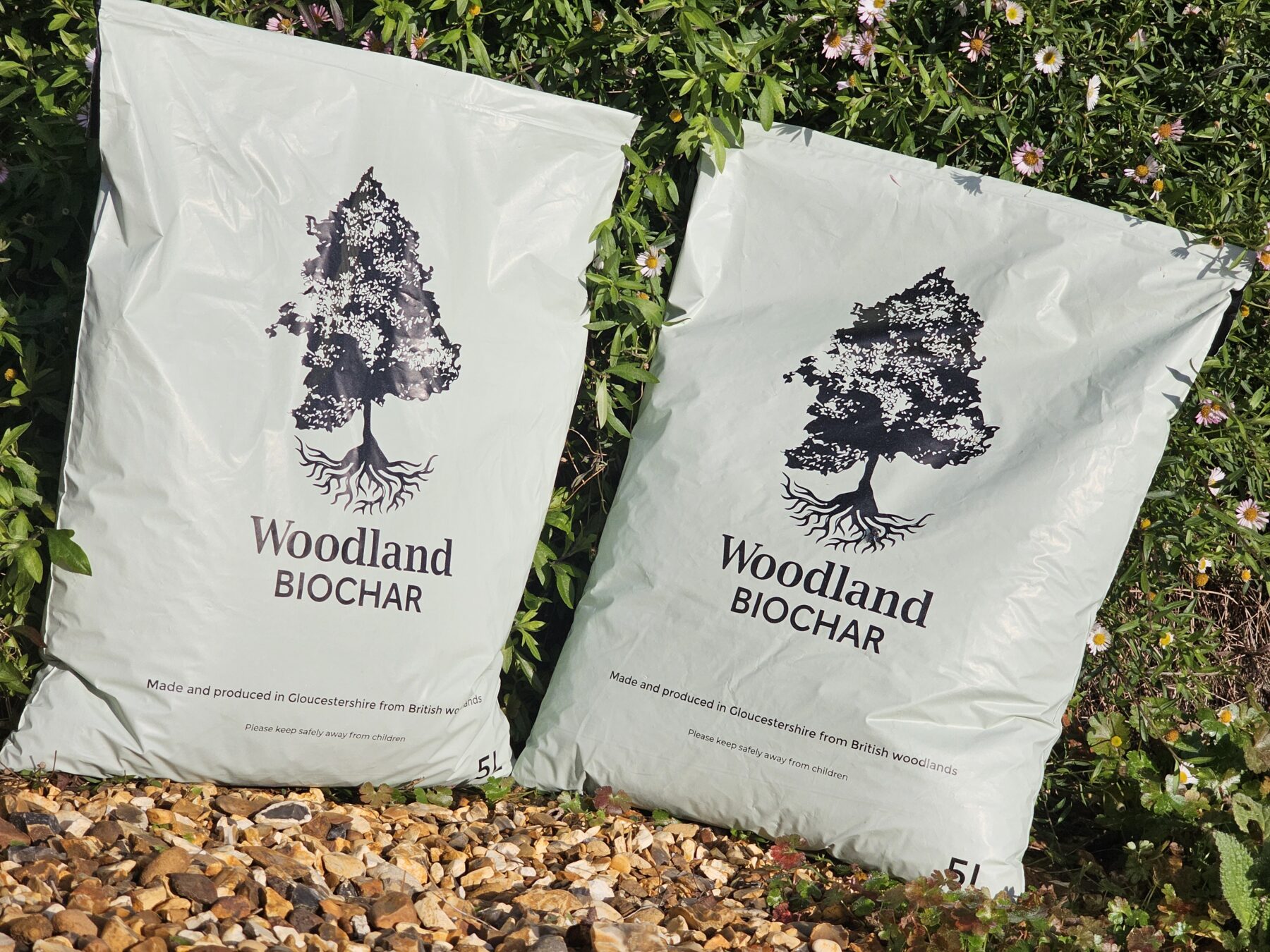
Our Woodland Biochar
Is sustainably made from coppiced woodlands, by Tim in Gloucestershire. Tim has been coppicing his beautiful hardwood woodland (including Alder, Oak, Birch, Hazel and Ash) for 30 years. He makes furniture and fencing etc., leaving at least 20% for wildlife habitat. Making biochar with the excess wood was a perfect way to cycle the waste biomass that no one else wanted.
Tim’s farm is a hive of sylvian industry and he uses his own biochar for tree planting and some extremely well-grown and tasty tomatoes he is most proud of!
So how can we make use of the benefits of biochar and be a force for good on the planet?
Biochar can be used in several ways:
- directly to the soil as a mulch
- in planting holes
- make compost with it (see How to guide)
| Amount/Dosage |
Ingredient |
Description |
| Variable |
Biochar particle size 5mm |
A charcoal-like substance created through pyrolysis, used to improve soil structure and fertility |
| Variable |
Untreated hardwood |
Sourced from sustainably managed woodlands to create a natural soil enhancer |
| Variable |
Carbon (Captured) |
Biochar captures 80% of its weight in carbon, helping reduce CO2 in the atmosphere |
| Variable |
Trace Minerals |
Biochar contains minerals beneficial for plant growth and soil health |
| Variable |
Low Ash Content 1-2%
pH neutral |
Ensures the biochar is effective and does not contain harmful contaminants |
Biochar helps improve soil fertility, retains moisture, and contributes to carbon capture, making it an eco-friendly addition to gardening.
Unless making compost or mulching, you will need to prepare the biochar to be effective as a soil enhancer:
First, we need to create the right conditions. This means adding moisture, the soil microbes (inoculate) and some food for the microbes (charge). Doing both will give you an activated biochar.
There are several ways to do this, depending on resources and time available and how much fun you want to have with it.
The easiest way is to use it to make compost.
Add Biochar to your compost (co-composting method)
The easiest way to encourage the microbes to move in is to add biochar to your compost. Ideally add at the start of the process with aged or moist woodchips (At a rate of 10% of the completed pile- this seems to vary depending what you read, but a good starting point).
The compost will provide moisture and food for your microbes. At every stage of the composting process, the biochar will be absorbing the nutrients, microbes and developing diverse biology
Advantages of co-composting:
- No need to soak, inoculate (add microbes) or charge (allow absorption of nutrients)
- Reduces need for turning
- Get finished compost in half the time
No time to wait for compost?
You will need to add the water, microbes and nutrients yourself:
Make a compost extract to inoculate and charge the biochar:
You’ll need to use living, biologically active, mature compost or worm casts to ensure you transfer the micro-organisms to the water (so not the garden-centre/supermarket variety)
- Fill a 5-gallon bucket with clean-non-chlorinated water (rainwater or leave tap water outside in a bucket for 24 hours)
- Add a few handfuls of living compost to a mesh bag, old sock or tee-shirt and tie it closed
- Submerge the bag in the water and massage and agitate for 1-3 minutes so the microbes and organic particles wash off the solid humus. This will turn the water a dark brown colour
- Leave the bag to steep for an hour if you have it. To let more nutrients dissolve. It’s worth the investment
- Remove and re-use the contents of the bag- in your compost bin, or on a garden bed
- Add it to your biochar immediately, so the microbes don’t die. Mix everything thoroughly, so the biochar is evenly moist, similar to a squeezed-out sponge, but not sitting in excess liquid. Keep it covered in a warm, shaded place for around 2-3 weeks, stirring occasionally.
- The exact amount of liquid may need adjusting because different biochars absorb water differently.
- Your living compost extract can also be used directly as a soil drench, a foliar spray, dip seeds, seedlings or bare-root plants prior to planting or as a compost heap activator
- Add a few handfuls of your activated biochar to planting holes for trees, shrubs and perennials- especially fruit trees
- Most plants will benefit from mycorrhizal fungi granules directly to the root system (except brassicas, pinks, proteas, sedges and rushes, carnivorous and parasitic plants)
- Mulch with plain or activated biochar up to the drip line of perennials and shrubs
Find out more about biochar:
About
Resources – Wilson Biochar