

November is the month to sow broad beans in the UK, although on heavy ground the seed belongs in a pot under cover. Most guides tell you to push ‘Aquadulce Claudia’ into the open bed this month, which on Welsh border clay often means rotten seed by Christmas.
Direct autumn sowing only pays on light, free-draining soil in a mild area, where water leaves the root zone within hours of rain. Everywhere else, a pot of peat-free compost in a cold greenhouse gives the same early crop without gambling the seed on a wet winter. Our guide on how to improve clay soil organically is the long-term fix, while a pot is the answer for this winter.
The Soil Test That Decides When to Sow Broad Beans in the UK
Before you open a seed packet, dig a hole about 30 cm deep in the bed and fill it to the brim with water. Let it drain away, fill it again the next morning and check how much water still stands in the hole a day later. If the hole is empty, the soil drains freely enough for a direct sowing in October or November.
If water still sits there, the bed is too wet for a large seed that must lie in cold soil for weeks. Broad bean seed swells as it takes up water, which in airless, waterlogged clay leaves it rotting before the first root emerges. Field mice also dig up autumn-sown beans one by one, which can clear a short outdoor row in a few nights.
Large parts of the Welsh border sit on heavy, slow-draining soils that stay wet from November until well into March. Only light ground over sand or gravel in a mild garden suits a direct sowing at this time of year. Our hole test matches the RHS guidance on broad beans, which limits autumn sowing to milder areas with well-drained soil.
Why Autumn-Sown Broad Beans Crop Earlier and Miss the Blackfly
An autumn sowing wins on timing, because the plant does its slow early growth in winter rather than in April. Short November days hold the seedling still once its roots are down, leaving a short, sturdy plant to sit out the cold. When the days lengthen in spring, that plant already has a working root system and grows away weeks ahead of a March sowing.
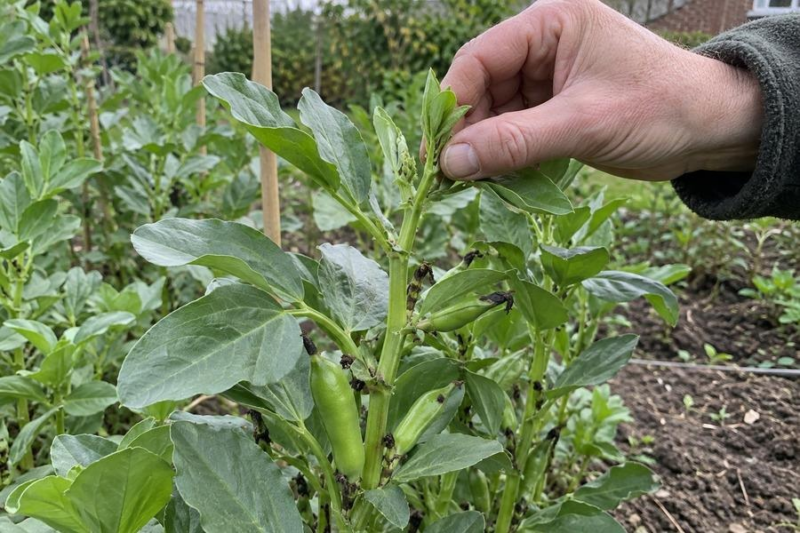
Sow ‘Aquadulce Claudia’ for this job, because it is the most dependable variety for autumn sowing and stands frost well once established. Blackfly spend the winter as eggs on spindle and viburnum, then fly to beans in late spring to feed on the soft shoot tips. An autumn-sown plant is usually flowering and setting pods by then, with tougher stems that the colonies find harder to build on.
Pinching out the tip at that point removes the softest growth before the main migration lands, which a spring sowing cannot match. None of that advantage depends on the seed spending winter in open ground, which is the point most autumn sowing advice misses. A bean sown in a pot under cover this week flowers at almost the same time, provided it goes into the bed in March.
Sowing Broad Beans in Pots Under Cover in November
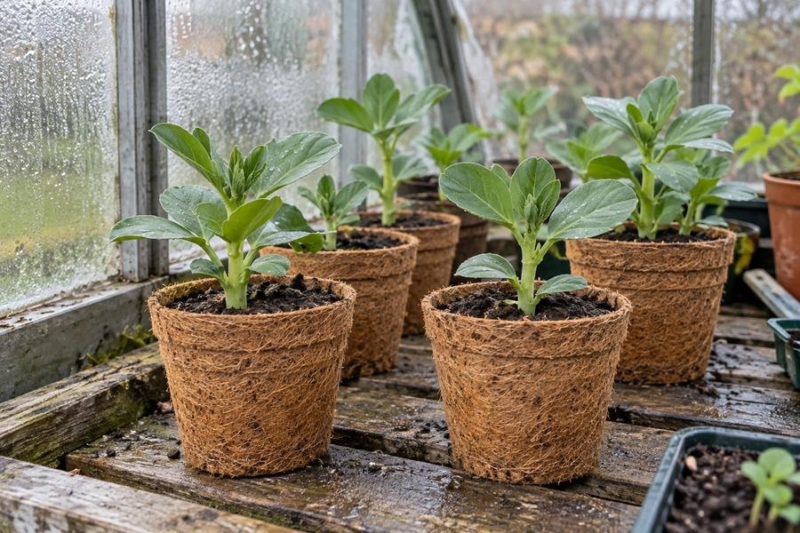
Sow one bean per pot in our Coir Pots, pressing it about 5 cm deep with the scar facing down. A coir pot is the right container for a crop that resents root disturbance, because the whole pot goes into the ground in spring. As our guide to what a coir pot is explains, the roots grow straight through the fibre walls and leave no plastic behind.
Fill each pot with peat-free compost, such as our Peat Free Coir Compost Discs, which expand when soaked in water. A plain coir compost does the job and peat adds nothing, because a bean seed carries enough food for its first weeks. Keeping peat out of the pots leaves carbon-storing bogs intact, while coir puts to use a coconut husk that would otherwise go to waste.
Stand the pots in a cold frame or unheated greenhouse, raised on staging where mice cannot reach them easily. Water once after sowing, then only when the compost surface feels dry, because a sodden pot rots seed as surely as clay. Open the vents or the frame lid on mild days to keep growth short and sturdy instead of soft and drawn.
Planting Out Pot-Grown Beans in March
Plant out in March once the soil is workable, setting each coir pot with its rim just below the surface. Space plants 15 to 23 cm apart in double rows to make them easier to support with stakes and string later. Our guide to the benefits of coir pots explains why the roots establish faster when nobody has to pull them out of plastic.
Direct Sowing for Light, Free-Draining Soils
If your test hole drained within a day and your garden escapes the hardest frosts, a direct sowing in early or mid-November works well. Sow 5 to 7.5 cm deep with the scar down, in double rows with the same spacing as pot-grown plants.
Even on good ground, cover the row with fleece or a cloche during the coldest spells and remove it again on mild days. Check the row every few days for the first month, because mice work along a row at night and gaps are easier to fill early.
Our guide to improving soil before winter covers the light top dressing that is all a bean bed needs.
Pinching Out and Chocolate Spot in Spring
Push in stakes along each side of the double row in March and run string between them as the plants climb. Once the lowest flowers have set small pods, pinch out the soft top two leaf pairs of each stem. The plant then puts its energy into the pods, while the tips you remove cook down well like spinach.
If blackfly still arrive, our guide on how to get rid of aphids organically covers the options that leave ladybirds and hoverflies unharmed. Pot-sown autumn beans planted out in March usually give their first picking in late May or early June. Pick the pods while the beans inside are the size of a thumbnail, because older beans grow tough skins and a dark scar.
Chocolate spot shows as small brown flecks on the leaves that can merge into dark patches across the whole plant in wet weather. The fungus behind it thrives in damp, still air, which is one more reason the hole test matters before you choose a bed. Keep the full spacing and avoid watering over the leaves, then pull out badly marked plants rather than spraying anything onto the crop.
Leave the Roots in the Ground for Next Year’s Crop
Once you have picked the last pods in July, cut the stems at ground level rather than pulling the whole plant out. The roots carry small round nodules, where soil bacteria fix nitrogen from the air in exchange for sugars from the plant. Left in the soil, the roots rot down where they grew and feed the worms and fungi that build structure in heavy ground.
Most of the fixed nitrogen ends up in the beans you eat, which leaves a modest gain to the bed rather than a dramatic one. Leaving the roots still means less bought fertilizer for the next crop and keeps synthetic nitrogen out of the soil and nearby streams. Follow broad beans with hungry leafy crops such as kale or cabbage, which make good use of whatever the roots leave behind.
Grow broad beans in a different bed each year alongside your peas to stop foot rot and other soil-borne problems building up. Our guide to companion planting in the UK shows which crops to grow beside the beans and which to keep apart.
Questions About Sowing Broad Beans in November
When Is the Best Time to Sow Broad Beans in the UK?
Sow ‘Aquadulce Claudia’ in October or November for the earliest crop or sow other varieties from February to April. On heavy or wet soil, make the November sowing in pots under cover and plant out in March.
Can You Grow Broad Beans in Pots All the Way to Harvest?
Yes, if you use a deep container and a dwarf variety such as ‘The Sutton’, which stays short enough to need little support. Container plants dry out faster and crop lightly, which makes coir pots best as a start for the bed rather than a permanent home.
How Deep Should You Sow Broad Beans?
Sow 5 to 7.5 cm deep in open ground and about 5 cm deep in pots, with the scar facing down. Firm the compost or soil over the seed afterwards so that it sits in close contact with moisture.
Do Broad Beans Need Feeding?
Rarely, because bacteria in the root nodules fix most of the nitrogen the plants need from the air. A bed you top-dressed with compost in autumn usually holds enough potash and phosphorus for a good crop.
Sow in Pots This Week and Plant Out in March
If you are still deciding when to sow broad beans in the UK, let the hole test settle it this week. On heavy, wet ground, sow ‘Aquadulce Claudia’ now in Coir Pots filled with Peat Free Coir Compost Discs. Keep the pots in a cold frame until March and leave direct sowing to light soil in mild gardens, where seed survives winter without rotting.
< Back to all posts