

Most houseplant pests in winter start as a watering and air problem long before they become an insect problem on your windowsill. Fix the compost and the air first, then treat whatever survives with something you would happily use beside the dinner table.
The usual advice reaches straight for a bottle, which kills some insects and leaves the warm, overwatered room that bred them exactly as it was. We think that order is backwards, especially in a heated room where you sit and eat beside your plants every day.
Survivors get neem or living predators, for the reasons in our piece on the benefits of neem oil. Anything harsher has no place in the rooms you live in.
What Central Heating and Short Days Do to a Houseplant
A November windowsill gets little more than eight or nine hours of weak daylight. Most houseplants respond to that gloom by almost stopping growth, which means their roots take up far less water than in summer.
Meanwhile the radiator under the windowsill pushes hot, dry air up through the leaves for hours every evening. The result is compost that stays wet around the roots and foliage that stays parched, which suits pests far better than plants.
Wet compost suits fungus gnat larvae, while warm, dry air lets spider mite keep breeding through a season when it would slow down outdoors. That is why we treat every winter outbreak as a sign about the room before we treat it as a sign about the insects.
Reading the Signs of Houseplant Pests in Winter
Each of the four common winter pests leaves a sign you can check in a minute while you water. Look for the sign first, then ask what in the room let that pest settle.
Fungus Gnats in Houseplant Compost
Fungus gnats in houseplants are the small dark flies that lift off the compost surface whenever you water or move the pot. The adults do little harm, although their larvae live in damp compost and can damage the roots of seedlings and young cuttings.
Overwatering is the condition to fix first, because the RHS guidance on fungus gnats ties them firmly to damp composts. A pot that never dries at the surface will keep producing flies, whatever you spray on the leaves above it.
Spider Mite Indoors
Spider mite indoors shows first as fine pale speckling on the upper leaf, with tiny moving specks underneath when you look closely. Heavier infestations spin fine webbing between leaf and stem, by which point the plant has usually lost a good deal of vigour.
It favours hot, dry air, which is why plants on a sill directly above a radiator usually show it first. Our full guide to getting rid of spider mites organically covers the same pest in the greenhouse during summer.
Mealybug on a Houseplant
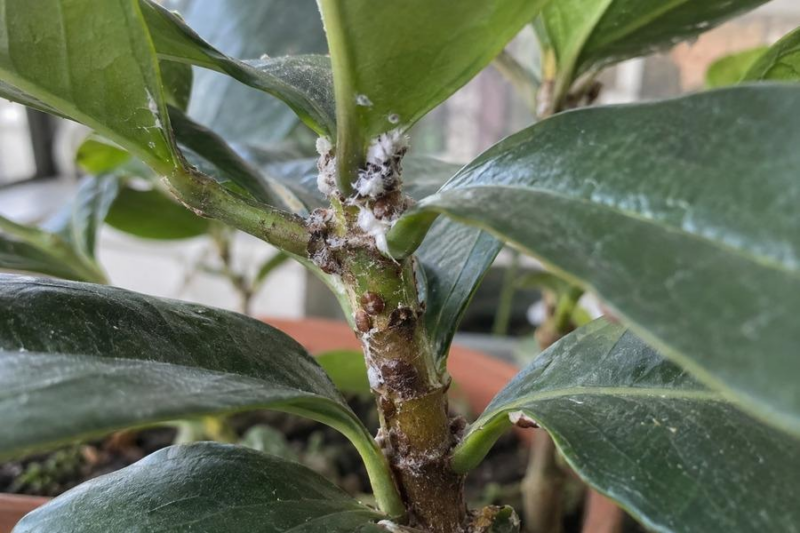
A mealybug colony on a houseplant looks like small tufts of cotton wool tucked into the leaf joints and along the stems. The insects suck sap and leave sticky honeydew behind, where a black sooty mould soon grows on the leaves below.
Most colonies arrive on a new plant or cutting, which means one Christmas gift can seed a whole windowsill by February.
Scale on Stems and Leaves
Scale insects look like small brown or grey bumps fixed along stems and leaf veins, which is why so many go unnoticed for months. Push a fingernail gently under one of the bumps, which will lift away cleanly if it is an insect.
A sticky shelf or table beneath the plant is often the first clue, because scale leaves honeydew in the same way as mealybug.
Change the Conditions Before You Reach for a Spray
Fixing the room does more than any spray, because it removes the reason the pests arrived and stops the next generation as well.
Water Less Than You Think
Water only when the top few centimetres of compost feel dry, which for many houseplants can mean every two or three weeks in November. Lift the pot to judge its weight before watering, then tip out any water left in the saucer after thirty minutes.
A drier compost surface starves fungus gnat larvae of the damp layer they need, which no spray can do for you.
Raise the Humidity Around the Leaves
Group plants together and stand them on trays of gravel, with water kept just below the top of the stones. Misting feels helpful, although the water evaporates within minutes in a heated room and does little against spider mite.
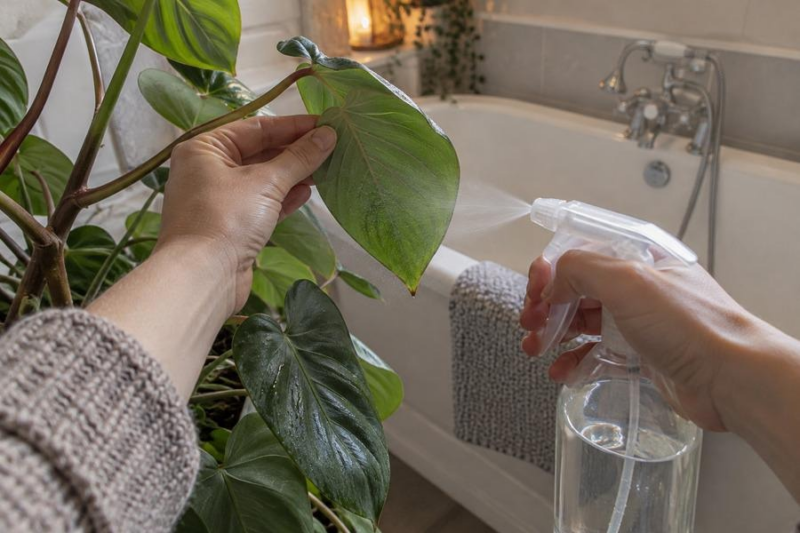
A lukewarm shower in the bath every few weeks, with the compost covered, does far more by washing mites off the leaf undersides.
Move Plants off the Radiator Shelf
Move plants off any shelf or sill directly above a radiator, even if it means a slightly darker spot for the winter. Choose a bright table beside the window, where the leaves keep their light without sitting in a column of hot, dry air.
Quarantine Every Newcomer
Keep every new plant, gift or cutting in a separate room for three to four weeks before it joins the others. Pelargoniums and citrus brought in from the garden need the same isolation, because they often carry aphids and whitefly indoors with them.
Our guides to getting rid of aphids organically and getting rid of whitefly organically cover both pests if they do slip through.
Repot into Fresh Compost
Repot any plant with a fungus gnat problem into fresh compost, shaking off as much of the old, wet mix as the roots allow. Our Peat Free Coir Compost Discs let you make up what one pot needs, which means no open bag sitting damp in the shed.
Coir also keeps peat out of the pot, which matters as much on a windowsill as it does in the border.
Treating What Remains Organically
Once the room is right, many outbreaks shrink back, which leaves a handful of plants that still need treating.
Some gardeners prefer a systemic houseplant spray because it seems to finish the job in one go. A systemic product sits in the plant and its compost inside a closed, heated room that you share every evening. It also leaves the soggy compost and radiator air untouched, which means the pests return as soon as it wears off.
The Neem Method
Neem oil on houseplants works best against soft-bodied pests such as spider mite, young mealybug and the crawling stage of scale. Adult scale hides under a hard shell, which is why we suggest lifting it off with a damp cotton bud before spraying. Wipe visible mealybug tufts away the same way, because neem reaches the insects underneath far better once the wax has gone.
Our guide to using neem oil gives our mix of around 5 ml per litre of warm water with a few drops of washing-up liquid. Spray at dusk and repeat every five to seven days for at least three weeks, which catches each generation as it hatches.
Spray in the bath or shower tray and leave the plant there overnight, which keeps any mist away from where you sit and eat. Test each plant on one leaf a day ahead, because hairy and very young leaves are the likeliest to mark.
Biological Controls in Warm Rooms
Living predators suit a heated conservatory or a warm, bright kitchen better than a cool bedroom sill, because they need steady warmth and light. For mealybug on houseplants in a conservatory, release Cryptolaemus Ladybirds and Larvae to hunt the colonies through the foliage.
For spider mite, the Red Spider Mite Pest Controller introduces Phytoseiulus, a predatory mite that feeds on spider mite and its eggs.
Release predators only after you stop spraying neem, because a fresh oily film can harm the helpers as well as the pests. For fungus gnats we recommend drier compost first, then nematodes or predatory mites from a specialist biocontrol supplier if the flies persist.
Your Questions on Winter Houseplant Pests
What Causes Houseplant Pests in Winter?
Wet compost and hot, dry air from radiators cause most outbreaks, while short days slow the plant too much to outgrow the damage. New plants and cuttings bring in mealybug and scale, which then spread along a crowded windowsill.
How Can You Get Rid of Fungus Gnats in Houseplants?
Let the top few centimetres of compost dry out between waterings and empty saucers promptly, which starves the larvae of the damp they need. Repot badly affected plants into fresh compost, then try nematodes if adult flies persist after a month.
Is Neem Oil Safe to Use on Houseplants?
Neem oil suits most houseplants when mixed at around 5 ml per litre of warm water, although hairy and soft young leaves can mark. Test one leaf a day ahead and spray in the bath, away from rooms where people and pets eat.
Is a Plant with Mealybug Worth Saving?
Most are worth saving if you catch the colony early, wipe off every visible tuft and follow up with neem for three weeks. Keep the plant isolated throughout, discarding it only if the colony returns after two full rounds of treatment.
Keep the Sprays out of the Living Room
Houseplant pests in winter rarely need more than drier compost and a plant moved off the radiator before you spray anything at all. When a pest survives, Organic Neem Oil sprayed in the bath deals with it and leaves nothing harsh where you sit. Keep a few Peat Free Coir Compost Discs by the potting bench too, ready for the plant that needs fresh compost before spring.
< Back to all posts