

How to get rid of whitefly organically is one of the most common questions UK gardeners ask in the late summer and for good reason. A whitefly infestation can devastate a greenhouse full of tomatoes or strip the vigour from an entire brassica bed within weeks, yet reaching for a chemical spray will almost certainly make the problem worse, not better.
What Is Whitefly and Why Does It Peak in August?
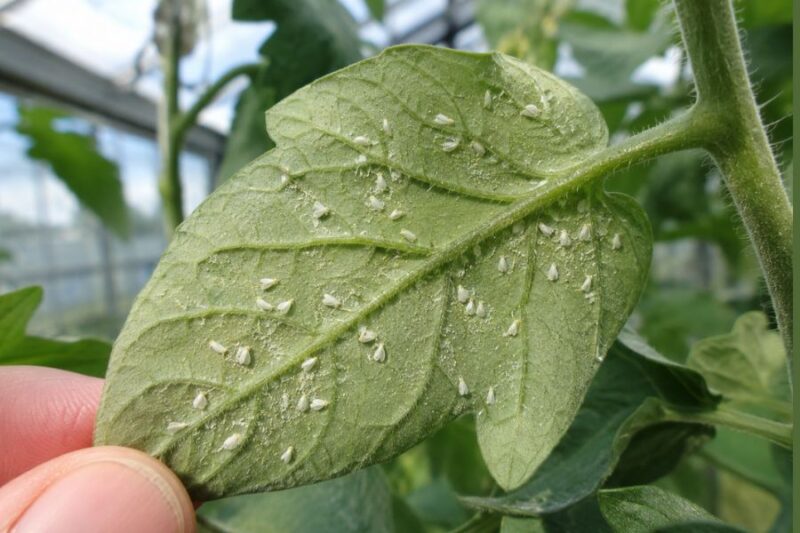
Whitefly are tiny, moth-like insects roughly 1–2mm long with powdery white wings. They congregate on the undersides of leaves, where they feed on plant sap and excrete a sticky honeydew that encourages sooty mould. Numbers build steadily through the growing season, peaking in August when warm temperatures accelerate their lifecycle, a single female can lay up to 400 eggs in her lifetime.
The plants most at risk in UK gardens are tomatoes, peppers, courgettes and brassicas such as kale, cabbage and Brussels sprouts. Greenhouse tomatoes are particularly vulnerable because the warm, enclosed environment suits whitefly perfectly.
How to Spot a Whitefly Infestation Early
The easiest way to catch whitefly before populations explode is to gently disturb your plants when you water or inspect them. If a cloud of tiny white insects rises from the foliage, you have an active infestation. Check the undersides of lower leaves for clusters of pale, scale-like eggs or the yellowish nymphs that hatch from them. Catching it at this stage gives you far more options than waiting until the plant shows visible stress.
How to Get Rid of Whitefly Organically UK: The Most Effective Methods
There is no single silver bullet, but a combination of approaches, applied consistently, will bring whitefly under control without synthetic pesticides. The key is to act quickly and layer your methods.
Neem Oil Spray
Organic neem oil is one of the most reliable organic treatments available to UK gardeners. Neem works as both an insecticide and a growth disruptor, interfering with whitefly development at the nymph stage and deterring adults from feeding. Use the same dilution you would apply for organic spider mite control, typically around 5ml of neem oil per litre of warm water with a few drops of washing-up liquid to emulsify and apply it as a fine spray directly to the undersides of leaves.
Always apply neem oil in the evening. Applying it during bright sunshine risks scorching the foliage and treating at dusk gives the solution time to penetrate before temperatures rise again. Repeat every five to seven days for at least three weeks to break the egg and nymph cycle.
Biological Control with Parasitic Wasps
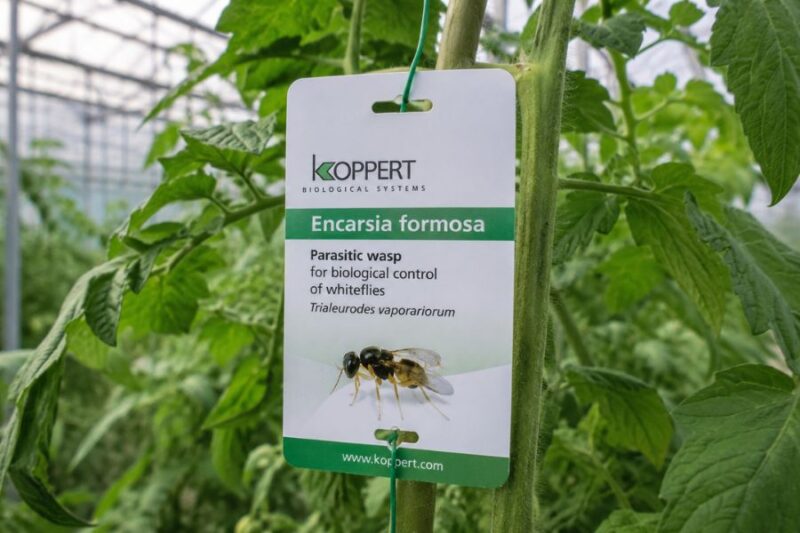
For greenhouse growers, biological control is arguably the most effective long-term strategy for whitefly on tomatoes and peppers. Encarsia formosa is a tiny parasitic wasp, harmless to humans, plants and beneficial insects, that lays its eggs inside whitefly nymph ‘scales’. As the wasp larva develops, it kills the host. You can introduce Encarsia formosa cards into your greenhouse from late spring onwards, before whitefly populations peak.
This approach is widely used by commercial tomato growers across the UK and is fully compatible with organic growing. Because it targets whitefly specifically, it leaves your garden’s broader ecosystem intact. For other greenhouse pest challenges, our guide to controlling aphids organically covers beneficial insect introductions in more detail.
Why Chemical Sprays Make Whitefly Worse Over Time
This is a point that does not get enough attention. Broad-spectrum chemical insecticides kill not only whitefly but also the predatory insects; hoverflies, lacewings, parasitic wasps that would otherwise keep whitefly populations in check naturally. Remove those predators and whitefly rebound faster, often with greater resistance to the chemical you used. It becomes a cycle that is very difficult to break.
Organic methods work with the ecosystem rather than against it. They are slower, admittedly, but they deliver durable results and protect the soil health that everything else in your garden depends on. Soil enhancers that support strong, resilient plant growth also make your crops inherently less susceptible to pest pressure; stressed, nutrient-poor plants attract more pests than healthy ones.
Companion Planting to Prevent Whitefly
Prevention is always preferable to cure and companion planting offers one of the most elegant preventive strategies available to organic gardeners. French marigold seeds (Tagetes patula) are particularly effective, their pungent scent confuses and deters whitefly and they attract hoverflies and other beneficial predators that feed on pest populations.
Plant French marigolds generously among your tomatoes, peppers and brassicas. In a greenhouse, a row of marigolds along each bed makes a significant difference to whitefly pressure throughout the season. For a broader look at how companion planting fits into a chemical-free growing strategy, our companion planting guide covers the principles in depth.

This approach aligns with the broader practice of creating a balanced, biodiverse growing environment, the foundation of everything we do at The Natural Gardener. A garden that supports a healthy range of insects will, over time, regulate its own pest populations far more reliably than one dependent on sprays of any kind.
Frequently Asked Questions
Does neem oil kill whitefly eggs?
Neem oil disrupts the development of whitefly nymphs most effectively, but it can also penetrate and damage freshly laid eggs when applied thoroughly to the undersides of leaves. Consistent repeat applications every five to seven days are essential to address the full lifecycle.
What plants are most affected by whitefly in UK gardens?
Tomatoes and peppers are the most commonly affected, particularly in greenhouses. Outdoor brassicas, kale, cabbage and Brussels sprouts are also highly susceptible, especially later in the summer season.
Can I use biological control alongside neem oil?
It is advisable to avoid applying neem oil at the same time as introducing Encarsia formosa, as neem can affect beneficial insects on contact. Introduce your parasitic wasps first and use neem oil only as a supplementary measure if populations surge unexpectedly.
When is the best time to start treating whitefly in the UK?
Act as soon as you see the first signs of infestation, do not wait for numbers to build. For prevention, introduce companion plants and consider biological control from late spring, before whitefly populations peak in August.
Knowing how to get rid of whitefly organically in UK gardens and greenhouses gives you a genuinely sustainable advantage over the season: healthier plants, a thriving ecosystem and no chemical dependency to manage. Start with organic neem oil for immediate treatment, introduce Encarsia formosa if you grow under glass and plant French marigolds throughout your beds to keep future infestations at bay. Explore our full range of organic pest and weed control products and build a growing environment that works with nature, not against it.
< Back to all posts