

What to feed garden birds in winter comes down to sunflower hearts, net-free fat balls, soaked mealworms and fresh water from a clean dish. Hygiene matters more than the menu, because a dirty feeder can do more harm to finches than an empty one ever could.
If greenfinches have thinned out at your feeder over recent winters, the cause may be hanging in your own garden. By the last week of November a blue tit faces over fifteen hours of darkness, with only a short day to refuel in.
The best winter food never comes in a bag, because it grows in the borders as seedheads, berries and insects sleeping inside hollow stems. Your feeder only tops that larder up, which makes a patch of native wildflower seed worth more than a second feeder.
Why a Feeder Can Harm the Birds It Feeds
A feeder gathers dozens of birds onto a handful of perches, which is exactly the crowding a disease needs to travel between them. Trichomonosis comes from a parasite that lives in a bird’s throat and passes to the next bird through saliva on shared seed and water.
The BTO (British Trust for Ornithology) report that research by Garden Wildlife Health, published in September 2022, links trichomonosis to falling greenfinch and chaffinch numbers. Sick birds look fluffed up and drowsy, often with damp feathers around the beak and seed they cannot swallow.
Damp seed left for days grows mould, while droppings build up on perches and on the ground beneath them. Some gardeners conclude that they should stop feeding altogether, although a clean feeder still does real good through a hard frost.
A Weekly Routine for Cleaning Bird Feeders
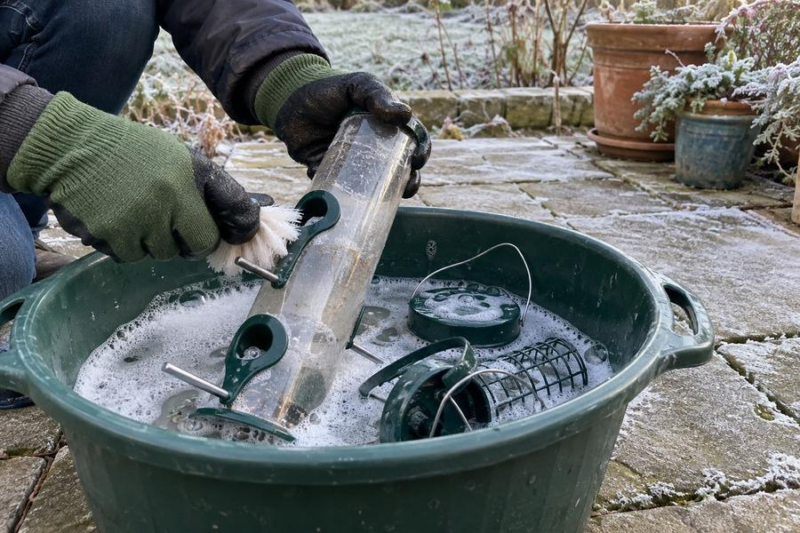
Clean every feeder once a week through winter as the BTO suggest, and sooner whenever the seed inside has turned damp or clumped. Take the feeder apart, tip the old seed into a bag for the bin and scrub every perch and port in hot soapy water.
A bottle brush reaches inside tube feeders, while an old toothbrush clears the seed ports where damp husks tend to collect. Rinse everything thoroughly in clean water, then let it dry completely before you refill it, because damp seed sours within days.
Keep a brush and bucket for the birds alone and wear gloves, because droppings carry germs that you do not want in the kitchen sink. Wash your hands afterwards, even when the feeder looked clean before you started on it.
Every few weeks, move the feeder to a fresh spot so that droppings and husks never pile up on one patch of lawn. Hang each clean feeder within a short flight of a hedge or shrub, though never so close that a cat can wait beneath it unseen. Our guide to keeping cats out of your garden naturally explains how to keep cats and feeding birds apart.
What to Feed Garden Birds in Winter and What Never to Put Out
Sunflower hearts are the one food we would choose if we could only buy one, because tits, finches, sparrows and robins all take them. Black sunflower seed costs less, although its husks gather under the feeder and need clearing more often.
Net-free fat balls and suet blocks give tits, starlings, nuthatches and woodpeckers dense energy for the longest nights of the year. Nyger seed draws goldfinches, while robins and blackbirds prefer soaked dried mealworms or crumbled fat on a low tray.
Peanuts belong in a rigid steel mesh feeder, which makes birds take small pieces rather than carrying off whole nuts. From the kitchen, unsalted cooked rice and uncooked porridge oats are both fine, while anything salted harms a small bird.
Never put out cooked fat from the roasting tin, because meat juices keep it soft and it smears into feathers that must stay waterproof. Cut fat balls out of their nylon mesh bags before you hang them, because the soft netting can trap a bird’s foot or tongue.
Put out only what the birds clear in a day or two, which stops food lying long enough to grow mould or draw rats. Whatever you buy, choose seed sold loose or in paper sacks, which keeps one more plastic bag out of the bin this winter.
Why Bread Fills Birds Without Feeding Them
Bread is the food most of us grew up throwing to birds, which explains why the habit survives in so many gardens. It is not poisonous, although it carries little of the protein, fat and vitamins a bird needs to last a frosty night.
A blue tit that fills up on crusts goes to roost feeling full while carrying too little fuel for more than fifteen hours of cold. Keep bread for the compost heap and give the birds sunflower hearts instead.
Keeping a Bird Bath from Freezing
Birds need water every day of winter, both to drink and to keep their feathers clean enough to trap warm air. A freeze locks up puddles and ponds just when birds need them most, which makes one open dish valuable to every visitor along the hedge.
Float a small ball on the surface, where every breeze moves it enough to keep a patch of water from freezing solid. On hard mornings, pour warm water over the ice to loosen it, then refill with fresh water rather than topping up the old.
Never add salt, antifreeze or any other additive, because each one harms the birds that drink from or bathe in the treated water. Choose a shallow dish with a sloping edge and scrub it alongside the feeders each week, because baths spread trichomonosis too.
The Winter Larder That Grows in Your Borders
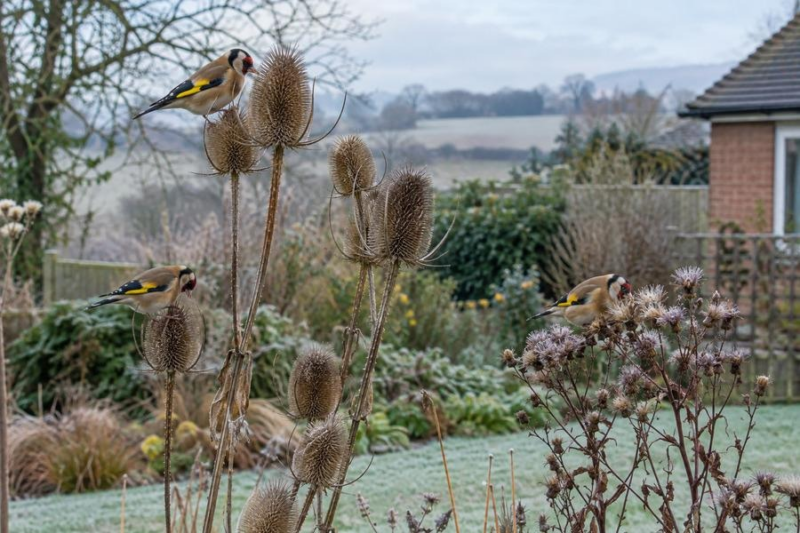
A clean feeder carries birds through a hard week, although the food for a whole winter grows in the borders you leave standing. Seedheads on teasel and knapweed keep goldfinches and sparrows busy, while hawthorn and ivy berries feed blackbirds, thrushes and redwings.
Hollow stems shelter overwintering ladybirds, lacewings, spiders and moth larvae, which wrens and tits pick out on every short day. Leaving those stems standing, as our October gardening jobs guide argued, keeps that larder open until spring.
That larder only works without pesticides, because a spray that kills aphids also kills the insects a blue tit hunts in January. Our guide to getting rid of aphids organically shows how to manage pests in summer without emptying the winter larder.
Native seed completes the larder, because it grows in your own soil rather than arriving as imported feed in a plastic sack. Our British Meadow Wildflower Seeds combine cornflower, poppy and oxeye daisy with mycorrhiza, which helps the young roots establish.
Sow now on weeded, bare ground if your soil is still workable or keep the packet dry and sow in March if it is waterlogged. Our guide to rewilding your lawn shows how even a small corner of turf can become next winter’s feeding ground.
Once flowers set seed, leave most for the birds and keep a little back with our guide on how to save seeds in a garden. For hedges, ponds and year-round planting, see our guide on how to create a wildlife-friendly garden.
Questions About Winter Bird Feeding in the UK
How Often Should I Clean a Bird Feeder?
Clean it once a week through winter, using hot soapy water and a stiff brush before rinsing it well. Let it dry completely before you refill it, because damp seed turns mouldy within days. Clean it sooner after a wet spell or whenever a bird at the feeder looks unwell.
What Should I Do If a Bird at My Feeder Looks Ill?
Take down every feeder and bird bath for a few weeks, which lets the flock spread out and stops the parasite passing on. Clean and dry everything thoroughly before you return it to the garden and refill it. You can also report the sighting to Garden Wildlife Health, who track outbreaks across the UK.
What Should I Feed Garden Birds in Winter If I Only Buy One Thing?
Buy sunflower hearts, because tits, finches, sparrows and robins all take them and they leave no husks behind. Add net-free fat balls when a hard frost sets in and the birds need extra fat.
Is It Harmful to Stop Feeding Birds Once I Start?
Birds visit many gardens each day, which means an empty feeder over a weekend will not leave them starving. A steady supply helps most through the coldest weeks, while a garden full of seedheads and berries keeps feeding them when you are away.
A Clean Feeder and a Standing Border
Deciding what to feed garden birds in winter matters less than keeping the feeder clean, which is why the brush comes before the seed bag. Scrub the feeder this week, keep one dish of water open and leave the border standing until spring.
Sow British Meadow Wildflower Seeds now or in March so that next November your borders feed the birds before you fill a feeder.
< Back to all posts