

Rewilding your lawn UK-wide is one of the most powerful things a home gardener can do for local wildlife and it requires far less disruption than most people think. A conventional lawn covers an enormous amount of land across Britain, yet it supports almost nothing: no nectar, no habitat, no soil life worth speaking of.
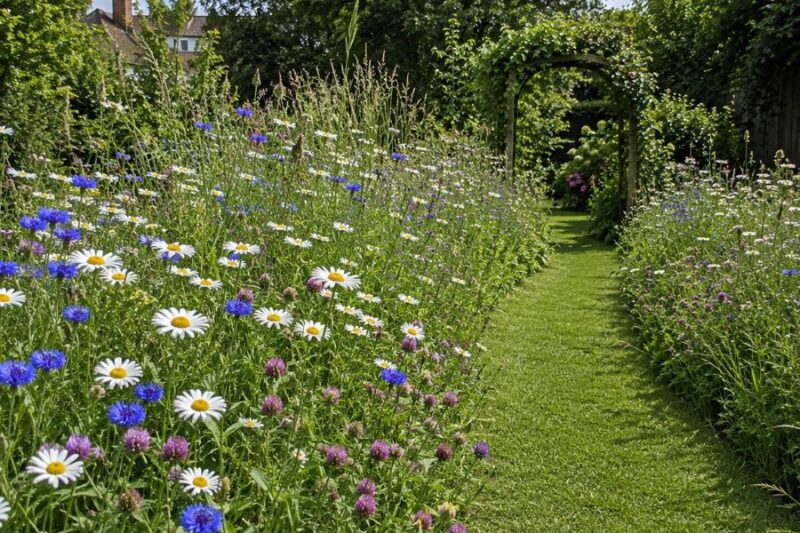
That is not a small problem. Research from the State of Nature 2023 report found that the UK has lost 19% of its biodiversity since the 1970s, with domestic garden management identified as a significant contributing factor. The tightly mown, chemically fed lawn it’s green, uniform and empty everywhere. Which means the opportunity to reverse some of that damage is also everywhere.
Why Your Lawn Is One of Your Garden’s Least Biodiverse Spaces
A conventional lawn is essentially a monoculture. It offers a single species of grass, cut so frequently that no flower head ever forms, treated so regularly that no insect dares linger. Compare that to a wildflower meadow, which can support up to 40 plant species per square metre and provide food and shelter for hundreds of invertebrate species and the contrast is stark.
The cost to wildlife is real and cumulative. Bees have nowhere to forage. Butterflies have nothing to nectar on. Beetles and ground-nesting insects lose the bare soil patches and taller stems they depend on. Hedgehogs, which need invertebrate-rich ground to feed, pass through but find nothing to sustain them.
What Rewilding Your Lawn UK Means in Practice
Here is the objection that stops most gardeners: rewilding sounds like neglect. It sounds like the garden gets away from you, the neighbours complain and you end up with a jungle of dock and bramble. That is not what this is.
Rewilding is intentional. It means making deliberate choices about what grows where, managing structure so the result looks considered rather than chaotic and working with natural processes rather than against them. Neglect is passive. Rewilding is active, even if the activity looks different to mowing.
Three Ways to Start — Choose Your Level
Not every garden or gardener is ready for a full meadow conversion. That is fine. There are three genuinely practical entry points, each one meaningful.
Let a Patch Grow
The simplest starting point is to stop mowing a section of your lawn, ideally at least one square metre, though larger is always better. Mark it with low edging or a mown border so it reads as intentional. Within weeks, grasses will grow tall enough for insects to shelter in. Within a season, wildflowers that have been suppressed in your soil for years may re-emerge on their own.
This costs nothing. It asks only that you resist the urge to cut.
Scarify and Oversow With Wildflower Seeds
If you want faster, denser results, scarify the area first, rake it hard to remove the thatch and expose bare soil, then scatter British meadow wildflower seeds across the surface. Native mixes designed for UK conditions will establish far more reliably than imported varieties, and they provide the right nectar sources for native pollinators.
Press the seed lightly into contact with the soil and water in dry spells. You will not see the full picture until the following spring, but the foundation is set.
Full Conversion
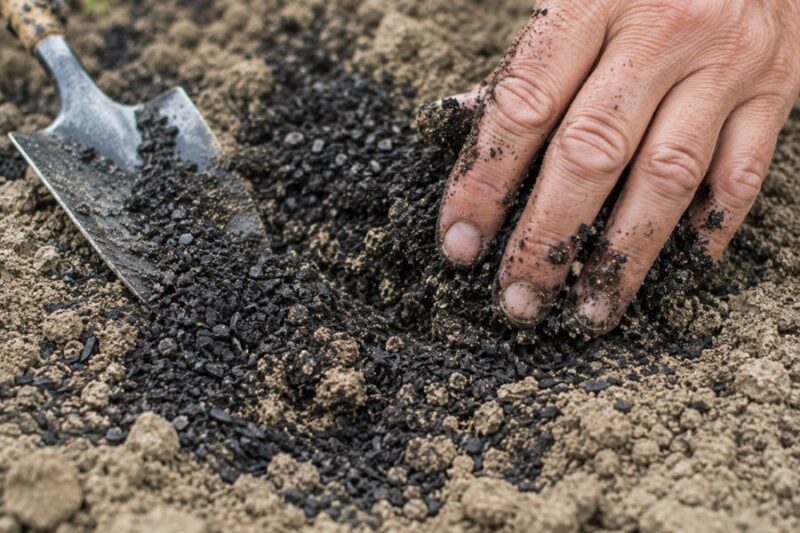
A full conversion means removing existing turf, improving the soil, and establishing a wildflower meadow from scratch. This gives you the most control over species composition and the most dramatic results. It is also where soil health becomes critical, wildflowers actually prefer low-fertility soil, but giving a newly converted patch a biological boost with biohumus wormcompost helps establish the microbial life that a healthy, living soil depends on.
Adding biochar to a converted patch improves soil structure, increases water retention and creates the micro-habitat conditions that soil invertebrates thrive in. Think of it as building a foundation, not just scattering seed on ground.
What to Do Right Now in July
Many gardeners assume it is too late in the season to start. It is not. July is actually a productive moment to act because the soil is warm, bare patches are easy to identify after summer heat and annual wildflowers sown now can establish and even flower before autumn.
Scatter seed into any bare or thinned patches of your lawn today. Cornflowers, poppies and phacelia can all establish from a late summer sowing. For perennial meadow species, a July sowing will give you strong root development through autumn, with flowers arriving next year. The key is soil contact and consistent moisture in the first few weeks, both entirely manageable.
How to Make a Wildflower Patch Look Intentional
The single most effective thing you can do to make a rewilded patch look considered rather than neglected is to mow a path through it. A simple curved or straight mown path signals design. It tells visitors and neighbours, that a human being made this choice on purpose.
Edge the patch clearly. Keep the surrounding lawn tidy. Let the structure speak. When people can see the contrast between the managed and the unmanaged, the wildflower area reads as feature rather than failure.
Cutting back the whole patch once a year in late summer, removing the cuttings to keep fertility low, is the only significant management task the patch needs.
The Wildlife That Follows
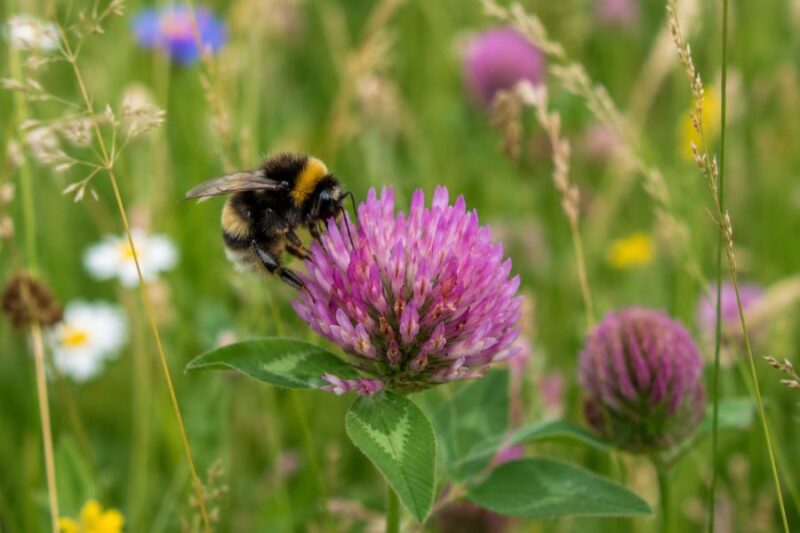
Get this right and your garden becomes something genuinely different. Bumblebees and solitary bees will use the patch within days of the first flowers opening. You can give the bee community a further boost by introducing a bumble bee colony to support early-season pollinator populations while your wildflowers establish.
Hoverflies, often mistaken for bees are voracious aphid predators in their larval stage and excellent pollinators as adults. Butterflies, particularly meadow browns and gatekeepers, will lay eggs in longer grass. Ground beetles will colonise the base of taller stems. Hedgehogs, drawn by the concentration of invertebrates, will begin to use the patch as a feeding ground.
This is Nature’s Natural Cycle made visible in your own garden. Each species that arrives makes the habitat richer for the next one. For more on building this kind of layered habitat, the guide on how to attract pollinators to your garden covers complementary planting and habitat strategies in depth.
How Wildflower Patches Improve Your Soil Over Time
Beyond the visible wildlife benefit, a wildflower patch quietly improves the ground beneath it. Deep-rooted plants like yarrow and bird’s-foot trefoil break up compacted soil layers that grass roots never reach. Decaying plant material feeds soil fungi. Root exudates feed bacteria. Over two or three seasons, the soil beneath a wildflower patch becomes measurably more alive than the compacted, depleted ground beneath a conventional lawn.
This is where organic soil enhancers earn their place, not as a substitute for the natural process, but as an accelerant. Give a newly converted patch the best possible start, and the biological engine takes over from there.
Frequently Asked Questions
When is the best time to start rewilding a lawn in the UK?
Early spring and early autumn are the optimum windows for sowing wildflower seed, because soil moisture is more reliable and temperatures are mild. However, July is a perfectly viable time to sow annual species into bare patches, and the warm soil accelerates germination. Do not wait for the ‘right’ moment — act now and adjust.
Do I need to remove my existing lawn before rewilding?
Not necessarily. Letting a section grow and oversowing with wildflower seeds works well without full turf removal. However, if you want a dense, species-rich meadow, removing existing turf and reducing soil fertility gives wildflowers the best possible start, they do not compete well against vigorous, established grasses.
Will rewilding my lawn attract pests or cause problems with neighbours?
A well-managed wildflower patch actually reduces problem pest populations by encouraging predatory insects, hoverflies, ladybirds and ground beetles. As for neighbours, a clearly edged patch with a mown path through it reads as a design feature, not neglect. Communication helps too: most people respond positively when they understand the wildlife purpose.
How do I stop a wildflower patch from becoming dominated by weeds?
Cut the whole patch back to around 10cm in late summer and remove all cuttings. This reduces soil fertility and prevents rank, weedy species from taking over. Avoid adding compost or fertiliser to a wildflower area, low fertility is what wildflowers prefer.
Rewilding your lawn in the UK does not demand perfection, a large garden or specialist knowledge. It demands only the willingness to change what ‘a good lawn’ means to you and a handful of the right seeds in the right patch of ground. Start small, manage it with intention, and let the biology do the rest. Browse our British meadow wildflower seeds and soil enhancers to give your rewilded patch the strongest possible foundation.
< Back to all posts