

When to plant tulips in the UK has a firm answer, which is November, once the soil has turned properly cold. Most gardeners plant in September because that is when the bulbs reach the shops, which is the wrong reason to plant anything.
If a net of tulips has sat in your shed since the end of summer, you are not late at all this year. Wait for cold soil and plant deeper than feels natural, because those two decisions keep bulbs clean and bring them back the following spring.
Our September guide on how to plant spring bulbs the natural way covers daffodils, crocus and layering for early autumn. Tulips are the one spring bulb that rewards holding back, for reasons that start in the soil.
When to Plant Tulips in the UK: Later Than the Shops Suggest
Bulb suppliers ship in late summer because that timing suits daffodils and crocus, which need a long autumn to make roots. Tulips come from the mountains of Central Asia and gain nothing from a head start in warm autumn soil.
By mid-November the days here in Shropshire are under nine hours long, while the soil has lost its September warmth. That cold is the protection your bulbs need, which a September planting never gets.
How Tulip Fire Takes Hold in Warm Soil
Tulip fire is a fungal disease, Botrytis tulipae, which scorches and twists the leaves before spotting the petals in a bad year. The fungus rests in the soil and on infected bulbs as small black bodies, waiting for mild, damp weather to become active.
A bulb planted into warm September soil can start growing while that weather still lasts, which gives the fungus weeks to find soft new tissue. Cold soil slows both the bulb and the disease, which means a November bulb meets the fungus later and in far weaker conditions.
That mechanism is why the gardeners at RHS Wisley say November is often the best month to plant tulips. They link tulip fire to mild, humid conditions, which describes a typical UK September far better than a cold November.
Knowing When to Plant Tulips in a UK Autumn
Go by the soil rather than the calendar and plant once several cold nights have chilled the ground below the surface. Push a finger into the top few centimetres of soil and plant when it feels cold rather than cool.
In most UK gardens that point arrives in November, while a mild year on the Welsh border can push it into early December. Planting tulips in November still leaves plenty of time for roots, which grow steadily through winter in soil that is cold but not frozen.
Keep waiting bulbs in a paper bag in a cool, dry shed, where they stay firm for weeks without any harm. Squeeze each one before planting and discard any that feel soft or carry dark, sunken spots, which can be the first sign of tulip fire.
How Deep to Plant Tulips for Next Year’s Flowers
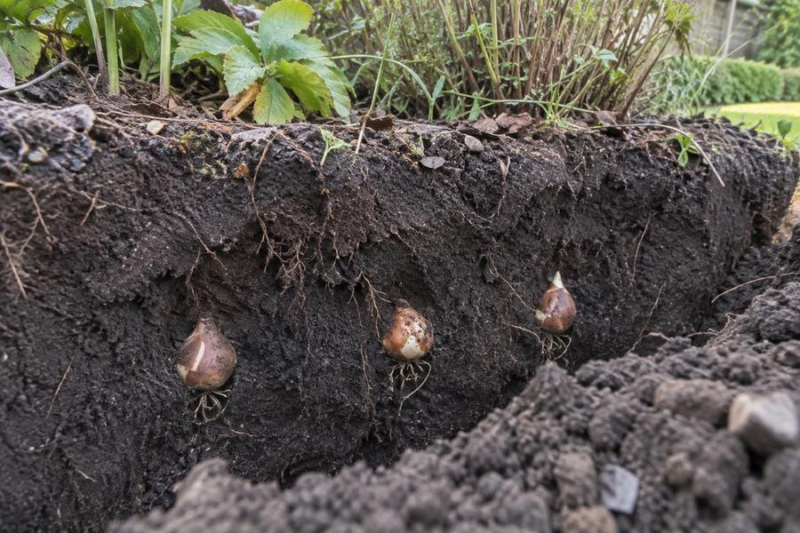
Planting depth decides next year’s flowers more than any feed, yet most gardeners set their tulips far too shallow. Set each bulb about three times its own height deep, which puts the base of a 5 cm bulb 15 cm down.
Deep bulbs stay cooler through summer, which reduces their habit of splitting into several small bulbs that are too weak to flower. They also stand firmer against April wind and dry out less during a warm spring, when shallow bulbs often flop.
A deeper bulb is harder for squirrels to find, although a square of chicken wire pinned over fresh plantings helps for the first few weeks. Lift the wire as soon as the shoots appear, before the leaves grow through the mesh and get trapped.
Deep planting on heavy ground needs drainage beneath the bulb, which our guide on how to improve clay soil organically covers in detail. Where clay stays wet all winter, a raised bed or the trough method below gives tulips a far better start.
Varieties That Return and Varieties for One Spring
Whether tulips come back every year depends on the variety you buy far more than on anything you do after planting. Most modern hybrids are bred for one spectacular spring, which is why so many borders thin out by the second April.
Cultivars of Tulipa fosteriana are often perennial, a point the Wisley gardeners make in the same article on tulips. Darwin hybrids share that reputation, while small species such as Tulipa tarda spread slowly in a sunny, well-drained spot.
Parrot and double tulips put everything into one season and rarely flower well again, however deep you plant them. Grow them in a trough for a single display, then give the spent bulbs a corner where a weak return will not matter.
The Coir Trough Method, From Patio to Border
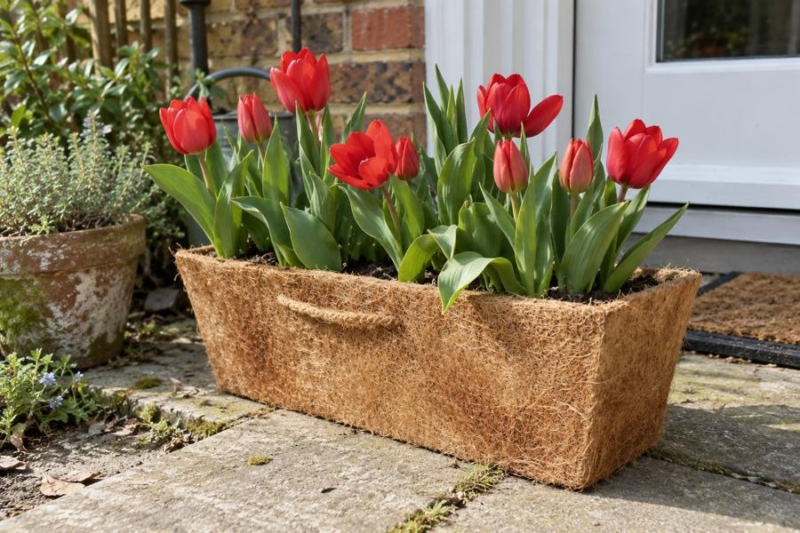
A Coir Trough gives you tulips by the back door in spring and then becomes part of the border where they grow on. Our troughs are about 50 cm long and roughly 15 cm wide and deep, which takes a generous double row of bulbs.
They last two to three years above ground and break down faster once buried, which is exactly what this method needs. A trough about 15 cm deep cannot hold tulips at full depth alone, which is why the bulbs sit low on peat-free compost.
Plant the trough this month, water it once to settle the compost and stand it somewhere sheltered that still catches the rain. In April it moves to the door in full flower, where you can enjoy the display without crossing a wet lawn.
Once the petals drop, dig a trench in the border and lower the whole trough in with its rim about 10 cm below the surface. Backfilling over the rim puts the bulbs at the full depth they need while the roots grow on into the surrounding soil.
A plastic pot from the same display usually ends up cracked behind the shed or sent to the tip with the rest of the rubbish. Coir breaks down in the border where the tulips grow on, which leaves nothing for the bin at the end of the season.
Our guide on what a coir pot is explains where the coconut fibre comes from and what happens to it in the soil. The seven benefits of coir pots apply just as well to a trough of tulips.
After Flowering, Deadhead and Leave the Leaves
Snap off each flower head as the petals fall, which stops the bulb putting energy into seed it has no use for. Leave the stem standing, because it feeds the bulb in the same way as the leaves around it.
Keep the leaves in place until they yellow and pull away easily, because they are the only source of food for next year’s bulb. Tying them into knots or cutting them early for a tidier border costs you next spring’s flowers in exchange for a few neater weeks.
Bulbs planted by the trough method stay where they are, because the trough sits in the border and breaks down around them. Border tulips planted at full depth can stay in the ground too, which saves you lifting them and storing them in a shed every summer.
Questions Gardeners Ask About Tulips
Is Planting Tulips in November Too Late?
No, planting tulips in November is right on time for most UK gardens, because cold soil slows tulip fire. Plant at any point this month once the ground feels cold, provided it is not waterlogged.
Can I Still Plant Tulips in December?
Yes, December planting works well as long as the ground is neither frozen nor sodden. The flowers may open a week or two later than a November planting, although the display is usually just as good.
Do Tulips Come Back Every Year?
Some tulips come back every year, depending mainly on the variety and how deep you planted them. Fosteriana cultivars and Darwin hybrids return most reliably when planted deep, while parrot and double types usually fade after one spring.
What Does Tulip Fire Look Like?
Look for twisted, scorched leaves and small pale spots on the petals, often with grey mould in damp weather. Dig out affected plants with their bulbs and grow tulips somewhere else for several years, because the fungus survives in the soil.
Planting Tulips This Month
Knowing when to plant tulips in the UK comes down to trusting cold soil over a September shop display. Plant this month into cold ground and plant deeper than feels natural for clean leaves and a second spring.
Start with a Coir Trough by the back door, then sink it into the border after flowering instead of sending plastic to the tip. Shrubs going into the same border this winter can start with Mycorrhizal Fungi, which our guide to the benefits of mycorrhizal fungi explains.
The rest of this month’s work, week by week, is in our November gardening jobs guide, including the last bulbs for Week 3.
< Back to all posts