

How to plant spring bulbs UK the natural way is a question that more gardeners are asking each year, and for good reason. Done right, bulb planting sets up months of colour and supports the pollinators and soil life that make a healthy garden tick. Done with the wrong materials, it quietly adds plastic waste and synthetic chemicals to the very ground you are trying to nurture.
This guide covers everything from timing and depth to the best peat-free growing media and biodegradable pots for getting brilliant results without the environmental cost.
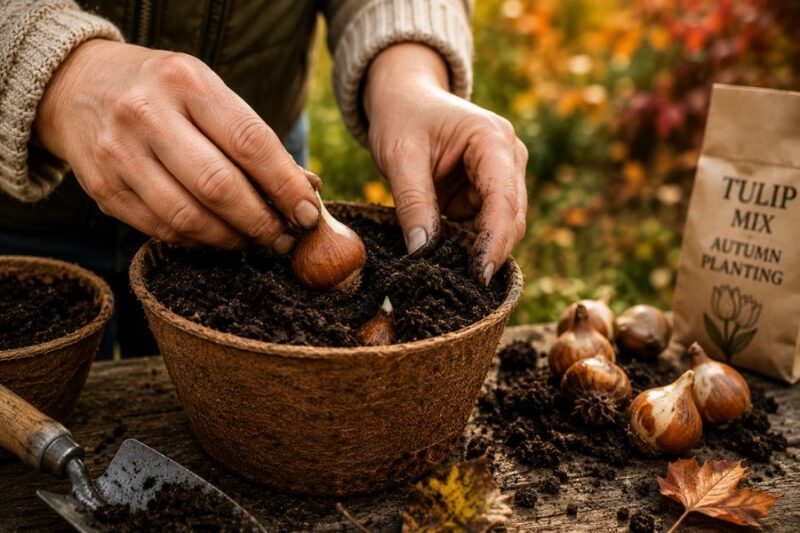
When to Plant Spring Bulbs in the UK
Timing is everything with bulbs. Most spring-flowering bulbs, including tulips, daffodils, crocuses and alliums, go in between September and November. The soil needs to have cooled below 10°C so the bulb can develop its root system before the ground freezes.
Tulips are the one exception worth noting. For best results, plant tulip bulbs as late as October or even November. Planting them later reduces the risk of tulip fire, a fungal disease that thrives in warmer, wetter conditions. Daffodils and crocuses, on the other hand, can go in from early September.
As a rule, if you can still comfortably sit outside in a t-shirt, wait a little longer before planting your tulips.
How Deep Should You Plant Spring Bulbs?
A general planting depth is two to three times the height of the bulb. A tulip bulb roughly 5cm tall goes in at 10 to 15cm deep. Smaller bulbs like crocuses and grape hyacinths sit at around 5 to 8cm. Always plant with the pointed end facing up.
Correct depth protects the bulb from frost and also gives it the leverage it needs to push shoots upward in spring. Too shallow and your bulbs risk freezing or being disturbed by birds.
How to Plant Spring Bulbs UK in Pots and Containers
Planting bulbs in pots is one of the most satisfying ways to garden, especially if you want to control exactly where the colour lands. It also lets you move displays around the garden as the season progresses.
The traditional approach uses plastic pots, but there is a far better option. Biodegradable coir pots are made from coconut husk fibre, which means they can go directly into the ground or compost heap once the season is done. No plastic, no landfill, no rinsing out old pots in November. For anyone growing with the environment in mind, this is a straightforward switch with a big impact.
Fill your containers with a high-quality peat-free compost. Natural Gardener’s organic compost is a ready-to-use option that supports both root development and soil microbiology from the moment you plant. Layer bulbs at the correct depth, water them in and leave them somewhere cool and sheltered until shoots appear.
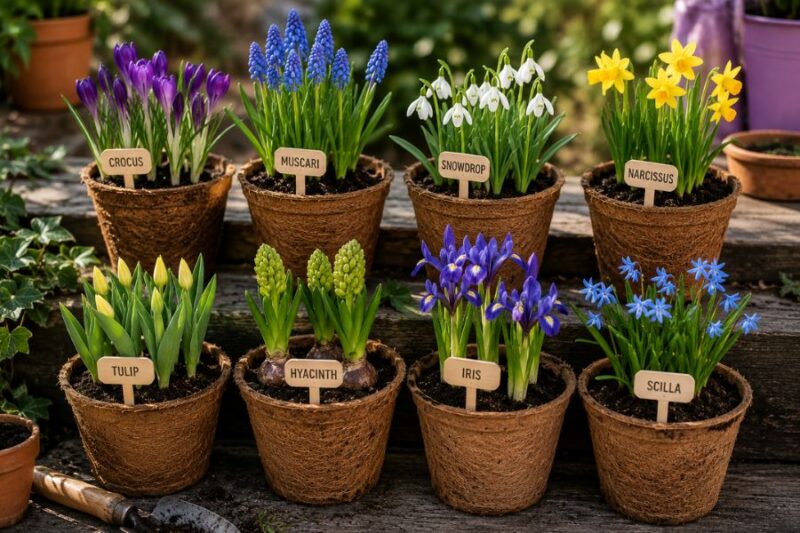
Can You Layer Bulbs in Pots for Extended Colour?
Yes, and it is one of the most effective techniques for a long season of interest. Gardeners call this a ‘lasagne’ planting method. Place your latest-flowering bulbs such as tulips at the bottom of the pot, then add a layer of compost, followed by mid-season bulbs like daffodils, another layer of compost and finally your earliest bloomers such as crocuses at the top.
The result is a pot that flowers in succession from late February right through to May. Adding a handful of biohumus wormcompost between layers gives each bulb a slow-release nutritional boost that synthetic fertilisers simply cannot replicate.
Preparing Your Soil for Spring Bulb Planting
Good drainage is critical. Bulbs sitting in waterlogged soil will rot before they ever see spring. If your garden has heavy clay soil, break it up before planting and work in organic matter to improve structure and airflow.
This is where biochar earns its place in the natural gardener’s toolkit. Biochar improves soil drainage, increases microbial activity and helps retain nutrients near the root zone. Mixed into the planting area before you set your bulbs, it creates the kind of soil environment where bulbs genuinely thrive rather than simply survive.
For areas of lawn or border that need broader improvement before planting, our guide to no dig gardening explains how to build soil health without disturbing the structure you already have.
Choosing the Right Bulbs for a Natural Garden
Not all bulbs are grown equally. Wherever possible, choose bulbs that are certified as responsibly sourced. Historically, wild-harvested bulbs have caused significant damage to native habitats across Turkey and the Netherlands, so it pays to check the label.
For a wildlife-friendly approach, prioritise species that support pollinators. Early-flowering crocuses and snowdrops are vital sources of nectar for emerging bees in late winter. Alliums attract hoverflies and bees later in the season. If you want to explore which plants do the most ecological good in your space, the advice in our piece on wildlife-friendly plants which help you rewild your garden is a practical place to start.
French marigolds planted nearby the following spring can also help deter pests naturally, particularly in cutting gardens where you want to protect your display.
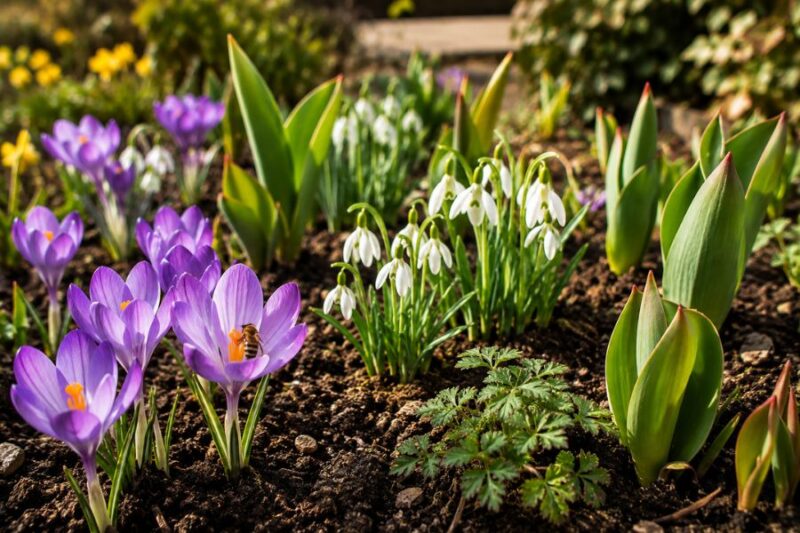
Feeding and Aftercare Once the Bulbs Are in
Once planted, most bulbs need very little attention through winter. After flowering in spring, the temptation is to tidy the foliage immediately. Resist it. The leaves feed the bulb for next year, converting sunlight into stored energy. Leave them for at least six weeks after flowering before cutting back.
If bulbs are growing in pots, give them a liquid feed once shoots appear in late winter. A dose of vermicompost soil extract applied to the soil surface is a gentle, highly effective way to support growth without the risk of nutrient burn that comes with synthetic feeds.
For broader autumn garden care, the october gardening guide on sustainable mulching and composting covers everything you need to do in the surrounding beds while your bulbs settle in. –
Frequently Asked Questions
What is the best compost for planting spring bulbs in the UK?
A peat-free, well-structured compost is ideal. Look for a mix that drains freely while retaining enough moisture for root development. Enriching your compost with wormcompost or vermicompost extract adds beneficial microorganisms that support bulb health through the colder months.
Can you plant spring bulbs in November in the UK?
Yes, particularly tulips. November planting is actually recommended for tulips as it reduces the risk of fungal disease. Other bulbs such as daffodils and alliums are best planted earlier, from September onwards, though they will still establish if planted before the ground freezes.
Do spring bulbs need feeding when planted?
Not immediately. Bulbs contain enough stored energy to get through winter and into flower without feeding. However, a natural slow-release amendment such as biochar or wormcompost added to the soil at planting time will improve conditions for root development and support flowering the following spring.
What happens if you plant bulbs too late in the UK?
Bulbs planted after the ground begins to freeze hard will struggle to root properly. They may still flower, but the display is likely to be reduced. If you have missed the ideal window, plant as soon as possible and apply a layer of mulch to insulate the soil and extend the planting season by a few weeks. – ## Plant Well This Autumn
Knowing how to plant spring bulbs UK the natural way means making choices that go beyond just putting something in the ground. The growing media you choose, the containers you use and the soil amendments you apply all have a lasting effect on both your garden and the wider environment. Coir seedling pots, peat-free coir compost discs and organic soil improvers from The Natural Gardener give you everything you need to get brilliant spring colour the right way. Browse the full range of natural soil enhancers and start planning your best spring display yet.
For further reading on building a more resilient, nature-forward garden, the Royal Horticultural Society’s advice on bulb planting is an authoritative resource worth bookmarking alongside your own growing notes.
< Back to all posts