

November gardening jobs in the UK come down to hosting, because this month the garden becomes a winter home for hedgehogs and birds. Most November guides still hand you a list of things to cut back and clear, which is the least useful work of all.
The gardener who lifts the bonfire before lighting it and opens the fence to hedgehogs does more good than one who tidies every border. Keep the water dish clean through the frosts and you have done more again, while the tulips still go in on time.
At our latitude in Knowbury, daylight falls from 9 hours 34 minutes on 1 November to 8 hours 5 minutes on 30 November. Every lost minute lengthens the night a blue tit or a hibernating hedgehog must survive on stored fat. Our October gardening jobs guide argued for covering the soil, while November makes that covered garden easy for wildlife to reach.
November Gardening Jobs in the UK, Week by Week
Each week below carries four or five jobs, with the reason each one belongs in that week rather than the next.
Week 1, 1 to 7 November: Check Before You Burn
Bonfire Night falls on Thursday 5 November this year, in the same week hedgehogs start searching for somewhere dry to hibernate. A pile of prunings left standing for even a few days looks like the perfect winter nest to a passing hedgehog.
Build any bonfire on the day you light it, on fresh ground rather than on top of the old pile. If a heap has stood overnight, lift it gently from the base with a broom handle and check the centre before you strike a match. Better still, leave the prunings as a habitat pile in a quiet corner for beetles and hedgehogs to share.
Start planting tulips this week as the soil cools, because cold soil checks tulip fire, a fungal disease that thrives in mild and damp conditions. The gardeners at RHS Garden Wisley say November is often the best month for tulips for exactly that reason. Our guide to when to plant tulips in the UK follows on 16 November with depths and the varieties that come back.
Sow sweet peas now if you garden in the south of England or the Midlands, where autumn sowings overwinter well in a cold frame. Cover the seed by about 1 cm and keep the pots cold, because the aim is deep roots instead of soft top growth. Northern gardeners should wait until January or February, as our sweet pea sowing guide explains when it arrives on 9 November.
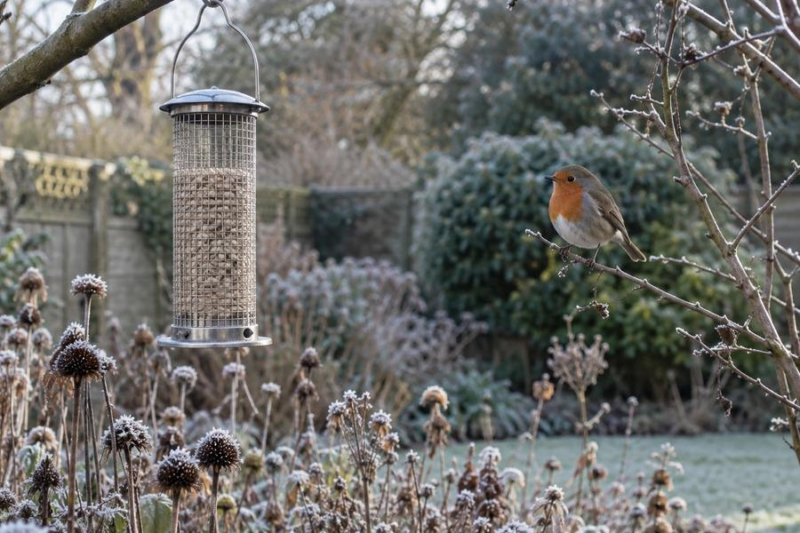
Take every bird feeder down this week and scrub it in hot soapy water, then rinse it and let it dry before refilling. Finch trichomonosis spreads through food and water fouled by sick birds, which is why feeders need a weekly clean from now until spring.
Week 2, 8 to 14 November: Open the Garden Up
A hedgehog roams across several gardens every night, which means a solid fence around yours shuts out a valuable slug hunter. Cut a gap of about 13 by 13 cm at the base of the fence, the size East Cambridgeshire District Council recommend for hedgehog access.
Set a shallow dish of water at ground level with a flat stone in it so a bird or small mammal can always climb out. Puddles and ditches freeze first in a cold snap, which leaves a garden dish doing far more work now than in summer. Empty and refill it every day so that droppings and fallen leaves never foul the water your visitors drink.
Plant roses and container-grown shrubs this week while the soil still holds some warmth from the autumn. Roots keep growing in mild spells long after the leaves drop, which gives anything planted now a full winter to settle before spring. Sprinkle Mycorrhizal Fungi onto the roots as they go into the hole so the fungal partnership with the soil begins on the first day.
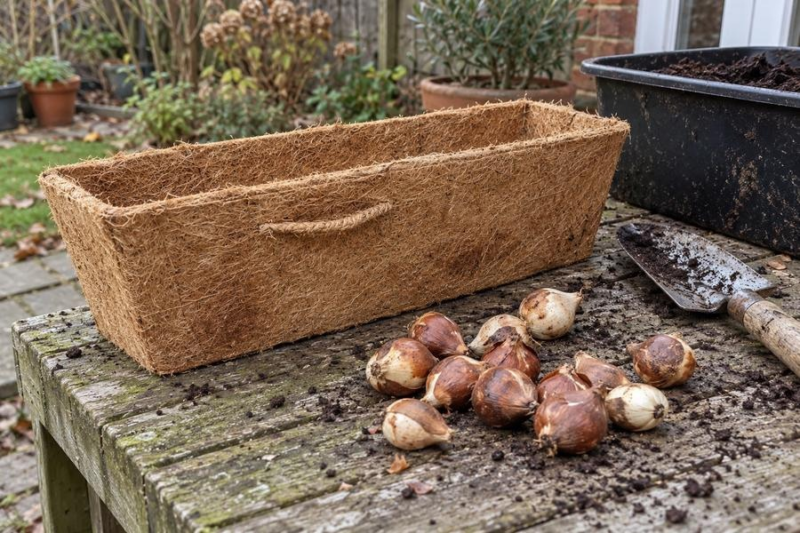
In milder gardens with well-drained soil, sow broad beans outdoors now for a crop several weeks ahead of any spring sowing. Choose ‘Aquadulce Claudia’, sow the seeds 5 to 7.5 cm deep and space them 15 to 23 cm apart in a double row. On cold or heavy ground, sow them about 5 cm deep in a coir trough under cover and plant the whole trough out in spring.
Week 3, 15 to 21 November: Plant the Last Bulbs
Finish the tulips this week while the ground still works easily, setting each bulb about three bulb-heights deep. Deeper planting holds the stems steady in spring winds and gives perennial types such as the Fosteriana tulips a better chance of returning.
Freshly turned soil over a bulb bed is exactly the loose patch a neighbourhood cat looks for when it wants somewhere to dig. Lay twiggy prunings or a scatter of holly leaves over the surface until the shoots appear, which keeps the bulbs in place without harming anything.
Go through stored apples, onions and potatoes this week and take out anything soft or showing patches of mould. Rot spreads by contact, which means one bad apple left in a tray can spoil every fruit that touches it. Put the bruised apples out on the lawn, where blackbirds, fieldfares and redwings will gladly finish them off.
In cold or wet gardens, lift dahlia tubers once the first frost has blackened the foliage down to the stems. Dry them upside down for about a week, then store them in barely damp compost somewhere cool and frost-free until April.
Week 4, 22 to 30 November: Feed, Water and Leave Alone
By 22 November we are down to 8 hours 25 minutes of daylight in Knowbury, which leaves a blue tit very little time to refuel. Small birds burn much of their fat reserves overnight, which is why sunflower hearts, unsalted peanuts and net-free fat balls matter so much now. Our guide to what to feed garden birds in winter follows on 23 November with the full menu.
The garden’s own larder matters just as much, because the seedheads and overwintering insects you left standing in October feed birds for nothing. A border full of teasel and knapweed heads carries goldfinches and wrens through spells when your feeders run empty.
On frosty mornings, float a small ball in the water dish so the slightest breeze keeps a patch of water moving and open. Where the dish freezes solid, pour in warm water from the kettle rather than adding salt or any other chemical. Every additive harms the birds and hedgehogs that drink from the dish, however small the amount.
Leave compost heaps and leaf piles alone from now until spring, because a hedgehog may already be asleep inside one. A fork pushed into a heap in December can injure a hibernating animal or wake it when it can least afford the energy.
Check your houseplants closely now the heating is on, because warm dry air from radiators suits spider mite and mealybug perfectly. Look under the leaves for fine webbing and follow our organic spider mite guide rather than reaching for a spray.
What Not to Do in the Garden This November
Keep the Sunday roasting tin fat for the bin, however generous it feels to share it on a cold afternoon. Meat juices keep that fat soft enough to smear onto feathers, which ruins the waterproofing a bird needs to survive a wet night.
Bread is the other kindness that misses, because it fills a small stomach without the fat a small bird burns at night. Unsalted cooked rice and plain porridge oats make far better kitchen leftovers for the bird table this month.
Do not dig over the beds you covered with leaves or compost last month, however untidy they look by now. Worms pull that cover down into the soil all winter while fungal threads knit it together, as our no-dig gardening guide explains.
Do not scatter chemical slug pellets around the new bulbs either, because the hedgehog you invited in hunts slugs and beetles in those same beds. Our guide to getting rid of slugs organically sets out the biological alternatives for next spring.
Do not drape loose netting over brassicas or fruit bushes, because hedgehogs and birds tangle in the slack folds and cannot get free. Use fine rigid mesh pulled taut over a frame instead or leave the crops uncovered until spring.
Do not push tulips into waterlogged ground just to keep to a date on the calendar. A bulb sitting in cold standing water rots far more readily than one planted a fortnight later into soil that drains.
Your Questions on November Garden Jobs
How Do I Protect Hedgehogs on Bonfire Night?
Build the bonfire on the day you light it so a hedgehog has no time to move in. If the pile has stood overnight, lift it gently from the base with a broom handle and check the centre before lighting.
Is It Too Late to Plant Tulips at the End of November?
No, late November is still a good time for tulips because the cold soil keeps tulip fire in check. Wait for waterlogged ground to drain first, then plant at about three times the height of the bulb.
What Should I Do in the Garden in November with Only One Weekend?
Lift and check any bonfire, cut a hedgehog gap in the fence and set out a clean dish of water. Plant your tulips on the same weekend, leaving the borders standing for the birds and insects that will use them.
Which November Gardening Jobs in the UK Help Wildlife Most?
Opening the fence and leaving heaps undisturbed help hedgehogs more than any amount of tidying, while clean water keeps birds going through frost. Keep chemical slug pellets out of the garden altogether and let the seedheads and insects in your borders feed the birds.
Plant for Spring, Then Leave the Guests in Peace
These November gardening jobs in the UK point towards a garden that holds more life in February than it did in October. When you plant roses or shrubs this month, start them with Mycorrhizal Fungi so the roots go into winter already working with the soil.
A coir trough of broad beans goes into the ground whole in spring, leaving no plastic behind on the potting bench. Next spring, sow British Meadow Wildflower Seeds so that cornflower, poppy and oxeye daisy seedheads can feed next winter’s finches.
Lift the bonfire before Thursday 5 November, then cut that gap in the fence before the hedgehogs settle for the winter.
< Back to all posts