

In the south and the Midlands, the answer to when to sow sweet peas in the UK is this month, in a cold frame. A November sowing gives stronger plants and earlier flowers than a spring sowing, as long as you keep every source of heat away from it.
Heat is the mistake that ruins autumn sweet peas, because warmth in short days pushes out soft shoots long before the roots can feed them. If you garden in the north or on high, exposed ground, wait until January and sow under cover then.
Everything else for this month sits in our November gardening jobs guide, which works week by week through a garden making room for winter guests.
When to Sow Sweet Peas in the UK Depends on Where You Garden
The regional windows we follow match the National Sweet Pea Society’s growing hints, which give October and November for the south and the Midlands. Northern gardens get a January or February window instead, with seed sown under cover so plants never sit through a full northern winter.
A November sowing in the south still faces four months of short days and cold nights, the conditions that build a strong plant. In the north those same months bring longer frosts and wetter frames, which kill more seedlings than the early flowers are worth.
Why Sweet Peas Spend the Winter Building Roots
Light is the brake here, with barely eight hours of it in a Shropshire day by the end of the month. With so little of it, a sweet pea in a cold frame makes almost no top growth, which is the whole point of sowing now.
Roots keep growing in cool compost that holds the shoots almost still, leaving the plant to spend the winter on the part you cannot see. Sowing sweet peas in autumn works because of that imbalance, a long, cold run underground that no spring sowing can match.
By mid-March an autumn-sown plant carries a long, branching root system under a short top with thick, sturdy stems. Those roots find water deep in the bed during a dry May, while a spring-sown plant is still settling into its first few weeks.
Warmth upsets that balance, because a warm plant in poor light stretches towards the glass and grows thin, pale stems. Those soft shoots ask more of the young roots than they can supply and draw aphids and grey mould in still, damp air.
How to Sow Sweet Peas in Deep Coir Pots
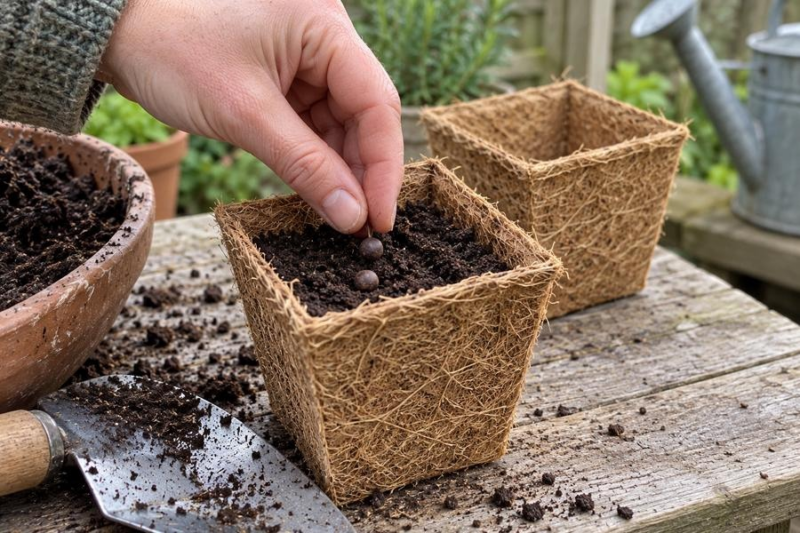
Sweet peas send a long root straight down soon after germinating, which makes deep pots for sweet peas matter more than the compost you choose. Shallow modules make that root hit the bottom and circle, after which it never runs as freely in open ground.
Many gardeners reach for plastic root trainers here, which turn brittle after a few seasons and end up behind the shed or in landfill. We would rather take that plastic out of the potting bench altogether and recommend coir for every sweet pea you sow.
Choose the 20 cm size of our Root Runner Coir Pots, the larger of the two, which go into the ground whole at planting time.
Our guide to what a coir pot is and how it breaks down explains what happens to the walls once they are in the soil. Our own story began in 2004, when Joe and Louise found hundreds of leftover plastic pots at a nursery, all heading for landfill.
They found their answer on the shores of Sri Lanka, where a group of tsunami widows were handcrafting plant pots from coconut coir. The full story of who The Natural Gardeners are explains how that trip led to the coir pots we sell today.
Sowing Step by Step
Fill each pot with peat-free compost and water it through, letting it drain for an hour before any seed goes in. Our Peat Free Coir Compost Discs expand with water into ready-to-use compost and keep peat out of the pot as well as plastic.
Sow two seeds per pot and cover them with about 1 cm of compost, then label each pot with its variety. Leave the pots unwatered after sowing until the surface dries, because cold and wet compost rots sweet pea seed before it can germinate.
Stand the pots somewhere cool and frost free, such as a porch or an unheated shed with a window, until the first shoots show. Move them into the cold frame the day the shoots break the surface, before they have any chance to stretch towards the light.
Keeping Autumn-Sown Sweet Peas in a Cold Frame
Prop the cold frame lid open on every mild, dry day, because moving air keeps the leaves dry and holds grey mould back. Close it on frosty nights and in driving rain, then open it again once the frost lifts the next morning.
Water far less than feels natural and only when the top of the compost looks pale and dry. Stand the pots on gravel or slatted staging so water drains away instead of pooling under the coir.
Mice find sweet pea seed quickly and can clear a whole row of pots in a single night. Fit fine wire mesh over the frame until the seedlings are well up, then check the youngest leaves for slug damage each week. Our guide to getting rid of slugs organically covers what to use in a closed frame instead of pellets.
Why a Heated Greenhouse Does More Harm than Good
Many experienced growers still believe autumn sweet peas need a heated greenhouse, a belief that ruins more autumn sowings than frost ever does. Sweet peas are hardy annuals that cope with frost in a sheltered frame, provided the compost is not waterlogged and the air keeps moving.
A heated greenhouse gives them warmth without light, the combination behind every pale, leggy seedling flopping against the glass by January. If your only shelter is a greenhouse, leave the heater off for the sweet pea bench and open the vents whenever the day allows.
Planting Out in March and Putting Up Supports
Autumn-sown plants go out around mid-March, a timing the National Sweet Pea Society share, while spring sowings follow later in the season. Harden them off for a fortnight beforehand by leaving the frame lid fully open in daylight and closing it only for hard frosts.
Prepare the bed while the soil is still workable, with a trench of well-rotted compost along the line of your supports. Our guide to improving soil before winter covers getting a hungry bed ready without wrecking its structure.
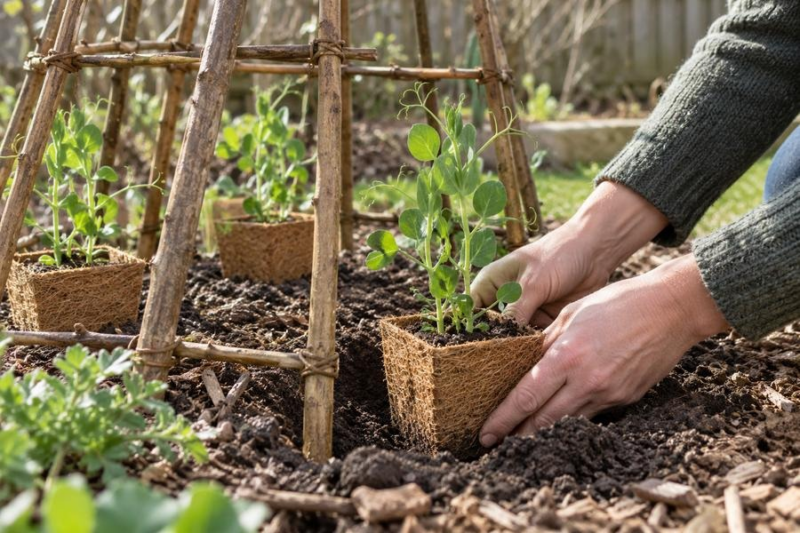
Set each coir pot straight into the soil with its rim just below the surface and firm the ground around it. The roots grow out through the coir walls into the bed and carry on the work they started in the cold frame.
Put the supports in before the plants, because a cane pushed in later can tear through roots you spent all winter growing. Hazel wigwams or netting stretched between posts both work, provided the tendrils have something thin enough to grip from the first week.
Your Sweet Pea Questions
Is November Too Late to Sow Sweet Peas in the UK?
No, November is still inside the autumn window for gardens in the south and the Midlands. Germination is slower than after an October sowing, although plants sown this month still go out in March with a good root system.
Should You Soak Sweet Pea Seeds Before Sowing?
Soaking is optional and divides experienced growers more than almost any other sweet pea question. For autumn sowing we would skip it, because swollen seed in cold compost is more likely to rot than germinate.
Do Autumn-Sown Sweet Peas Need Pinching Out?
Usually not, because autumn-sown plants tend to throw side shoots from the base on their own over winter. If a plant is still a single stem by early February, pinch the tip out above the second pair of leaves.
When Should You Sow Sweet Peas in the North of the UK?
Sow in January or February under cover, using the same deep coir pots and the same cold, airy routine. Your plants will flower a little later than southern autumn sowings, although they avoid a long winter of wet compost and hard frost.
Fill the Cold Frame Before the Month Is Out
For gardens in the south and the Midlands, sow your sweet peas in November and keep the cold frame unheated all winter. Start them in the 20 cm size of our Root Runner Coir Pots and fill them from our Peat Free Coir Compost Discs.
If you are still sowing into plastic, our list of the benefits of coir pots shows what changes in the potting shed when you switch. When the flowers fade next summer, let a few pods ripen and follow our guide on how to save seeds in a garden.
< Back to all posts