

How to prepare your garden for winter in the UK comes down to doing four jobs in the right order: drainage, cover, protection, structures. Most advice starts at the third one and skips the first two entirely.
That order is the whole argument of this piece. Get it right and one weekend in October does more than a month of fussing in December.
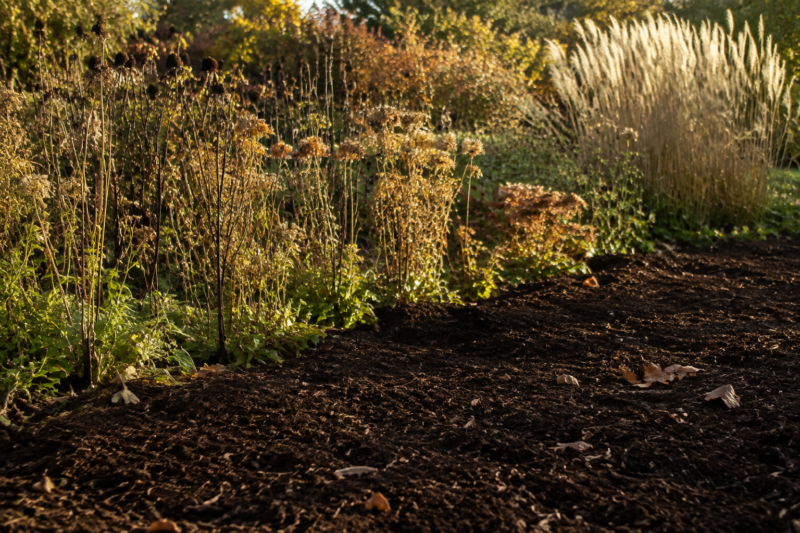
What Actually Kills Plants Over A British Winter
Waterlogging kills more garden plants than frost does. Roots sitting in cold, saturated ground, in soil with no structure left to drain, is the situation that finishes off borderline-hardy plants every year.
October is when the balance tips. More rain arrives, less sun comes to dry it out and the soil goes into winter wetter every week. Drainage and cover therefore come before fleece and cloches, every time.
Find Your Own Frost Date
The spread across the UK runs to weeks rather than days, from late October in the Scottish Highlands to December on mild southern and western coasts. A single national date is useless. Look up air frost averages for your nearest station and watch your five-day forecast.
Then work back roughly three weeks from your own average first frost. In our experience that is the point at which the critical jobs stop being optional. For most of the country it lands in October.
Priority One: Sort The Drainage
How to prepare your garden for winter UK, starting with the ground
Lift containers onto pot feet or bricks so water runs out instead of pooling in the base. It takes five minutes and it is the highest-value job of the season.
On heavy clay, work in something that opens the structure rather than digging the bed over and leaving it bare. Biochar improves drainage permanently rather than seasonally, which is why we treat it as an October job rather than a spring one.
Clear gutters, downpipes and any drain discharging near a border. Avoid compacting wet soil by walking on it. Lay a board if you have to cross a bed.

Priority Two: Cover The Ground
Bare soil loses structure, nutrients and fungal networks over a wet winter. Covered soil keeps all three. Most gardens want a combination of methods rather than one.
Compost or leaf mould works best across open beds. Organic compost plus applied as a loose mulch feeds the soil as it breaks down. Organic coir mulch mats suit individual plantings and containers, where loose material blows about.
Timing decides the benefit. Apply over soil that is still moist and holding warmth, which means October rather than December, when cold sodden ground has already lost most of what mulch protects. Our October mulching and composting guide goes deeper on method.
Priority Three: Protect What Is Actually Tender
Most established hardy perennials need nothing. Fleecing everything wastes effort and traps damp. Work out what actually qualifies before opening the bag.
Shelter beats wrapping. Move containers against a wall first. When you do wrap, wrap the pot rather than the plant, because roots freeze first in a container.
Lift dahlias and tender tubers in colder regions. A heavy mulch over the crown usually suffices in mild ones. For anything potted up and brought under cover, coir troughs and coir pots insulate better than thin plastic, which keeps roots steadier through temperature swings.
Priority Four: The Structures
Check stakes, ties, posts, arches and cold frame lids before the first storm rather than after it. A stake loose in October will be flat on the ground in November.
Clean the greenhouse glass while winter light still matters. Empty and store hoses, disconnect water butt taps before they split, then sharpen, clean and oil the tools before they go away.
What To Leave Completely Alone
Seedheads and hollow stems feed wildlife and hold structure through the coldest months. They look better under a frost than a cut stem does. Leave them standing.
Fallen leaves on borders can stay where they landed. One quiet corner with a leaf and log pile belongs undisturbed until spring. The lawn wants nothing now: no high nitrogen feed and no mowing on frosty ground. Our no dig gardening guide explains why leaving soil alone in autumn pays.
How to Prepare Your Garden for Winter UK: The Order Of Operations
Drainage first, cover second, protection third, structures fourth. Everything else is optional. One weekend before the weather turns goes on the first two.
One myth worth busting. Fleece is not winter protection in any meaningful sense. It keeps frost off foliage for a night or two, does nothing about waterlogged roots and, left on permanently, traps moisture against the plant and causes the rot you were trying to avoid.
One trade-off worth admitting. A garden prepared this way looks unfinished in November. Standing stems, mulched beds, leaves where they fell. The tidy version photographs better now. This one comes back faster in March.
Frequently Asked Questions
When should I prepare my garden for winter in the UK?
Work back roughly three weeks from your own average first frost date. For most of the country that makes October the critical month. Avoid relying on a single national date.
Should I cover my plants with fleece all winter?
No. Use fleece for forecast frosts and take it off again afterwards. Left on permanently it traps damp against foliage and causes the rot it was meant to prevent.
Do I need to mulch if I have heavy clay soil?
Especially then. Mulch protects the structure you spent the year building and stops winter rain compacting the surface. Biochar worked in before mulching helps open clay permanently.
Should I cut everything back before winter?
Only what is diseased or collapsing. Everything else earns its keep standing through winter, providing habitat, catching frost and protecting the crown below.
The Quiet Work
Knowing how to prepare your garden for winter in the UK comes down to putting water management first and doing it in October while the soil still has warmth to give. Organic coir mulch mats for contained cover, biochar for permanent drainage and organic compost plus across open beds are the three that do that work. Our eco friendly gardening tips cover the wider picture.
< Back to all posts