

How to get rid of leatherjackets organically in the UK has one practical answer: nematodes, applied to warm moist turf, in October. Miss that window and you wait a year.
Before you order anything, confirm it is actually leatherjackets. Half the lawns treated for them have something else wrong.
Why This Is An October Job
Soil still holds summer warmth in October while cooling from the surface down. The nematodes that control leatherjackets want soil above 12°C. Our own product guidance puts the practical cut-off around mid-month.
The larvae are also young and feeding close to the surface now. That is the stage at which biological treatment reaches them. By spring they are bigger, deeper and considerably harder to control.
Spring application is possible at double strength. You will still want to treat again the following autumn, which makes autumn the effective window either way.
What You Are Actually Dealing With
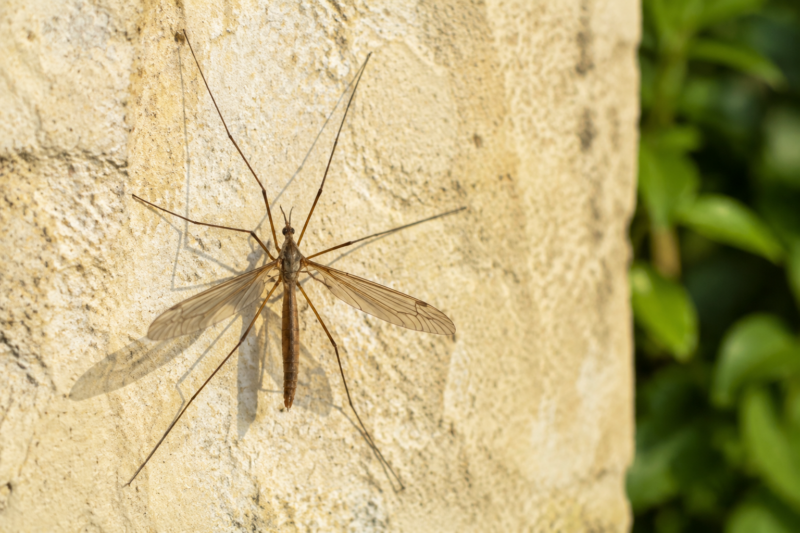
Leatherjackets are the larvae of craneflies. The RHS describe them as greyish brown with elongate tubular bodies up to 30mm long, no legs and no obvious head. They are undramatic to look at, which is part of the problem, because by the time the lawn shows damage they have been feeding for weeks.
One piece of context most guides leave out. Britain has around 350 cranefly species and the RHS are clear that most feed on decomposing matter or algae, form part of a balanced ecosystem and never trouble a lawn. Only a small number cause garden damage.
A second point worth knowing before you panic at the September swarm. Dry soil at egg-laying time kills a great many eggs before they hatch. A heavy year for adult craneflies does not reliably mean a heavy year for larvae.
The adults themselves cause nothing. They live a few days, do not feed on grass and are irrelevant to your lawn. Treating them achieves precisely nothing.
How To Tell It Is Leatherjackets
Yellowing, thinning patches come first. If sections of turf lift easily because the roots beneath have gone, that is a strong indicator. The grass did not die of drought. Something ate it from below.
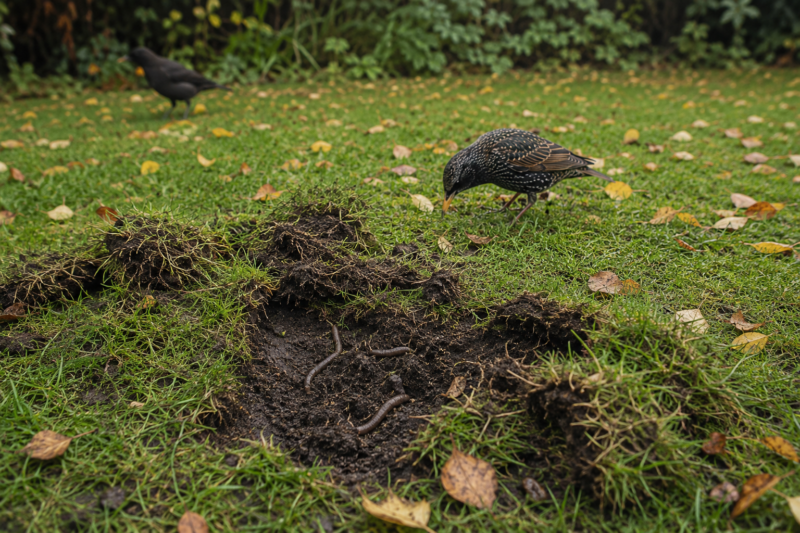
Birds are the more reliable tell. Crows, starlings and magpies tear at turf to reach the larvae and October is when that becomes obvious. A lawn being shredded by corvids usually has leatherjackets under it.
Confirming the diagnosis
Lay black plastic or damp cardboard over a suspect patch overnight, then lift it in the morning and count what has surfaced. Leatherjackets move upward in warm, moist, dark conditions.
Rule out chafer grubs before you buy. Those are white and curled with visible legs. They need the Nemasys Chafer Grub Nematode instead. Buying the wrong pack wastes a fortnight you do not have.
How to Get Rid of Leatherjackets Organically UK: The Nematode Method
The control is a naturally occurring nematode, Steinernema feltiae. It enters the larva through natural body openings and releases bacteria that stop the pest feeding. The larva dies, the nematodes reproduce inside it and disperse to find more.
Steinernema feltiae already lives in healthy soil in low numbers. A concentrated dose scales up a process running anyway rather than importing something foreign. Nemasys Leatherjacket Nematodes are harmless to earthworms, bees, hedgehogs, birds, pets and children.
For the wider principles behind biological control, our guide to staying ahead of gardening pests naturally covers the ground well.
The Window, And Why It Is Closing
Apply while soil holds above 12°C. In practice that runs from late summer to around mid-October across most of England and Wales. Scotland and the north close earlier. A soil thermometer costs very little and removes the guesswork.
Once soil drops below that, the nematodes lack the activity to work while the larvae carry on feeding slowly through winter. If the lawn window shuts before you reach it, vine weevil nematodes handle a different pest across a wider temperature range. Check that product page for the current threshold.
Our October mulching and composting guide covers the rest of the month if you want to plan around this job.
How To Apply, In Six Steps
Cut the grass short. Long grass reduces coverage and makes even watering harder.
Water the lawn first. The nematodes need moist soil to travel through. Dry turf limits how far they disperse.
Mix immediately before use. Apply with a coarse rose on a watering can or a hose-end feeder for larger areas, working in strips for even coverage.
Water again straight afterwards. This washes the nematodes through the thatch to where the larvae feed. The step matters more than any other.
Keep the area moist for two weeks. This is the step most people skip and the one that decides whether the treatment works. October rain usually handles it.
Store the pack in the fridge until the day. These are living organisms with a short shelf life. The pack instructions are the final word.
Repairing The Damage
Do not overseed before you treat. You would be growing fresh roots for the larvae to eat, which rather defeats the point.
Once treatment is done, scarify the affected patches lightly, overseed the thin areas and top dress with a thin layer of compost. Supreme Green Lawn Seed suits this. Autumn overseeding tends to beat spring: the soil is still warm, the rain does your watering and the seed establishes before winter.
What Does Not Work
Nothing sprayed on the surface will fix this. The larvae sit underground, out of reach of contact treatments.
Rolling, firming or sanding does nothing to the population. It smooths the surface while the feeding continues beneath.
Encouraging birds to dig is not a control method. It adds a second source of damage to the first.
This approach works more slowly than a synthetic treatment and it will not green a wrecked lawn overnight. What it does is break the cycle without touching a single earthworm, bee, hedgehog or bird.
Frequently Asked Questions
When is it too late to apply leatherjacket nematodes?
Around mid-October in most of the UK and earlier in Scotland and the north. Soil temperature decides the cut-off rather than the calendar. Below 12°C the nematodes lack the activity to work.
Are leatherjacket nematodes safe for pets and wildlife?
Steinernema feltiae is a targeted biological control, harmless to earthworms, bees, hedgehogs, birds, dogs and cats. It affects only its host pest.
Can I treat in spring instead?
You can, at double strength, though you should still treat again in autumn. Spring larvae are older, deeper and harder to reach.
How long until I see results?
The larvae start dying within days. The lawn takes longer, because the grass has to regrow its root system. Expect visible improvement over several weeks.
Act Before The Soil Cools
Knowing how to get rid of leatherjackets organically in the UK only helps while the temperature holds. Nemasys Leatherjacket Nematodes are the one October job with a hard deadline. We stock them alongside Supreme Green Lawn Seed for the repair that follows.
< Back to all posts