

When to plant tomatoes outside in the UK is the most-searched grow-your-own question every spring and most of the answers circulating online are either too vague to be useful or so cautious they cost you half the season. The honest truth is that outdoor tomatoes are entirely achievable in Britain. The reason so many crops fail has nothing to do with the weather and everything to do with three avoidable mistakes: planting too early, skipping hardening off, and choosing varieties that were never suited to a British summer.
Get those three things right and you will harvest a reliable outdoor crop. Get them wrong and you will be starting again in June, wondering what happened.
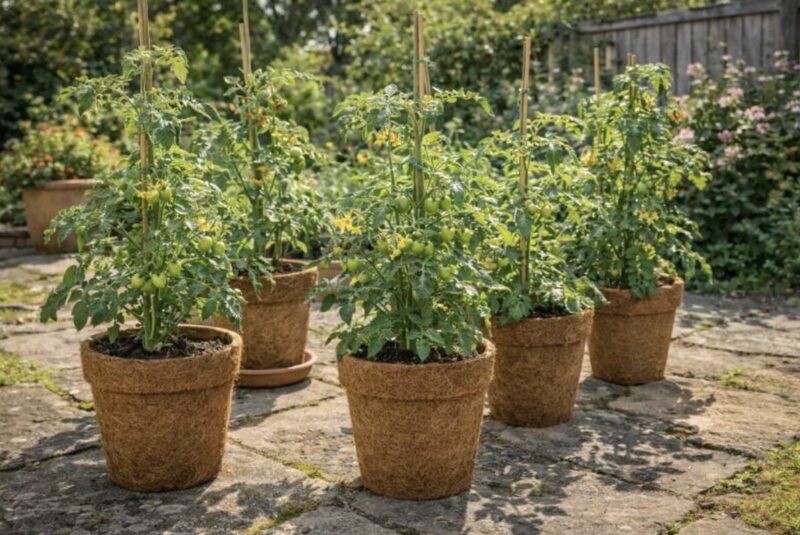
When to Plant Tomatoes Outside UK: It Depends Where You Are
The UK is not one climate. A gardener in Cornwall and a gardener in the Scottish Highlands are not working to the same calendar and treating them as if they are is exactly why so much advice misses the mark. The defining factor is your last frost date, plant before it and you risk losing everything overnight.
Here is the honest, regional breakdown:
South of England: Mid to late May. The last frost typically falls around 10–15 May, so planting out from the third week of May is generally safe. In sheltered coastal gardens, you may get away with the second week.
Midlands and Wales: Late May. Expect the last frost between 15–20 May. Wait until the final week of the month to be confident.
North of England: End of May to early June. Frost risk persists later here, particularly inland. Do not be tempted by a warm spell in mid-May.
Scotland and upland areas: Early to mid-June. The growing window is shorter, so variety choice becomes even more critical. Frost risk can persist well into June at altitude.
These are not worst-case estimates, they are working dates used by experienced growers. The Met Office frost date data backs them up, and 2025 has already demonstrated that late frosts in April and May are far from unusual even in southern counties.
The Biggest Mistake UK Gardeners Make
The single most common reason outdoor tomatoes fail is not the British summer, it is planting too early without hardening off first. A tomato seedling raised on a windowsill or in a heated propagator has never experienced wind, cold nights or fluctuating temperatures. Moving it directly outside, even after the last frost, puts it under enormous stress. Leaves curl, growth stalls and the plant becomes vulnerable to disease.
Hardening off means gradually acclimatising your plants over seven to ten days. Start by placing them outside in a sheltered spot for a few hours each day, bringing them back in at night. Increase the exposure progressively. It feels slow, but plants that are properly hardened off establish faster, root more strongly and crop earlier than those that were rushed out.
Choosing the Right Variety for Outdoor Growing
Not every tomato variety performs well outdoors in a British climate. Varieties bred for Mediterranean heat will sulk, refuse to ripen and fall prey to blight before autumn arrives. For outdoor growing in the UK, prioritise varieties with shorter growing seasons and proven blight resistance.
Gardener’s Delight, Tumbling Tom, Tigerella and Ferline are well-established outdoor performers. Ferline in particular carries strong blight resistance, a meaningful advantage in a wet British summer. Cherry types generally outperform large beefsteak varieties outdoors because they ripen faster and tolerate cooler temperatures.
Cordon varieties grown outdoors need staking and consistent side-shooting. Bush varieties are lower maintenance and better suited to exposed positions. If you are gardening in Scotland or the North, bush varieties in a sheltered spot will almost always outperform cordons.
Starting Seeds Indoors: The Right Window
Working backwards from your planting-out date gives you your sowing date. Tomatoes need six to eight weeks from sowing to be ready to plant outside. That means:
South of England: Sow from late March to early April. Midlands and Wales: Sow in early to mid-April. North of England and Scotland: Sow in mid to late April.
Sow too early and you end up with large, leggy plants sitting on a windowsill for weeks, deteriorating. Sow too late and you lose precious ripening time at the other end of the season.
Setting Your Plants Up for a Strong Start
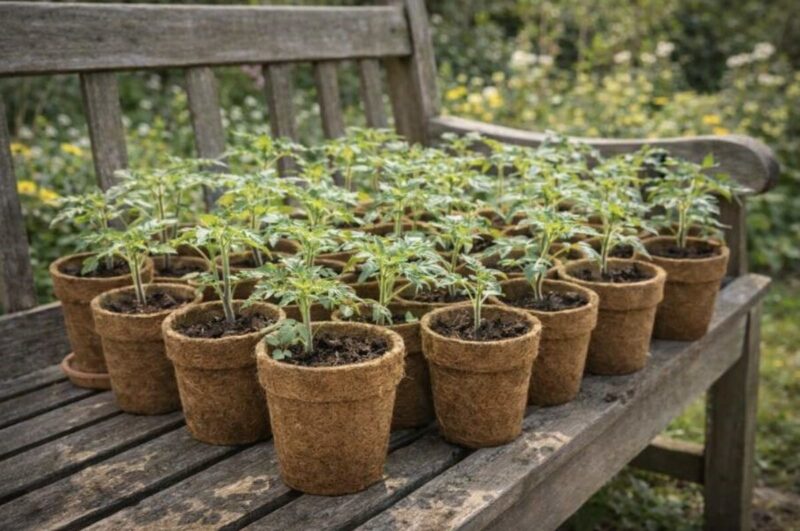
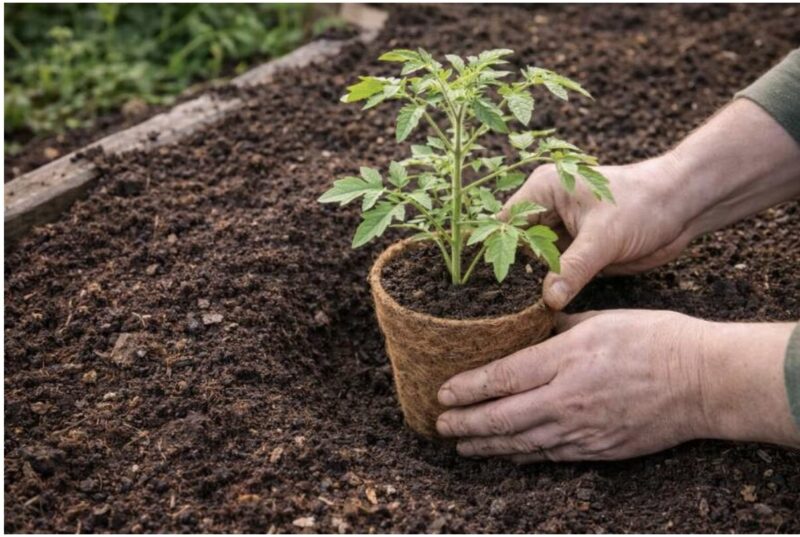
Biodegradable coir pots are the ideal vessel for raising tomato seedlings destined for outdoor planting. Because the pot itself breaks down in the soil, you transplant the entire thing, roots suffer no disturbance, establishment is faster and there is no plastic to dispose of. This is particularly valuable for outdoor tomatoes, where any check to root development early in the season shortens your cropping window.
Tomatoes are hungry plants. Starting them in a rich, biologically active growing medium makes a measurable difference to early growth. The Natural Gardener’s multi-purpose organic compost provides the organic matter and nutrients young plants need without synthetic inputs, important if you are growing food you intend to eat.
When planting out, consider incorporating mycorrhizal fungi around the root zone. These beneficial fungi extend the plant’s effective root network, improving nutrient and water uptake, particularly useful during the dry spells that characterise British summers. As we explain in the benefits of mycorrhizal fungi, the relationship between plant roots and mycorrhizal networks is one of the most reliable performance enhancers available to organic growers.
Protecting Your Crop Once It Is Outside
Even after your last frost date has passed, British weather is unpredictable. Keep fleece to hand for the first two to three weeks after planting out. A single unexpected frost in early June can destroy an unprotected crop, it happens every few years and it always catches people who were not watching the forecast.
Water consistently at the base of the plant rather than over the foliage. Wet leaves in cool conditions invite blight, and once blight takes hold in an outdoor crop it moves fast. Mulching around the base retains moisture, moderates soil temperature and suppresses weeds. Coir mulch mats do this job cleanly and break down naturally at the end of the season.
Feed once flowers appear. Tomatoes need potassium-rich feeding from this point onwards, not nitrogen, which promotes leafy growth at the expense of fruit.
Frequently Asked Questions
When is it safe to plant tomatoes outside in the UK without fleece protection?
The safest date depends on your region. In the South of England, mid to late May is generally safe without protection. In the Midlands and Wales, wait until the final week of May. In the North and Scotland, early to mid-June is more reliable. Always check local frost forecasts rather than relying on calendar dates alone.
Do tomatoes grow well outside in the UK?
Yes, with the right variety, correct timing and proper hardening off. Cherry and bush varieties are particularly well suited to outdoor growing in Britain. Large beefsteak types are more challenging outdoors because they need a longer, warmer season to ripen fully.
What happens if you plant tomatoes outside too early in the UK?
Plants subjected to cold temperatures before they are established will stall, become stressed and are far more susceptible to disease. A frost will kill unprotected plants outright. Even temperatures close to zero without a hard frost can cause cold shock that sets growth back by two to three weeks.
Does hardening off really make a difference?
It makes a significant difference. Plants that are hardened off properly over seven to ten days establish faster after planting out, develop stronger root systems and are noticeably more resilient than those moved outside without preparation. It is one of the most reliable things you can do to improve your outdoor tomato success rate.
Grow With Confidence This Season
Knowing when to plant tomatoes outside in the UK is the foundation of a successful crop but it is only the first step. The variety you choose, the growing medium you start them in and the care you take through hardening off are equally important. Browse our full range of coir pots and planters and organic compost and fertilisers to give your tomatoes the best possible start, naturally.
< Back to all posts