

October gardening jobs in the UK come down to one decision made once: cover the soil or clear it. Everything else follows from that choice.
Every other guide will tell you to tidy. This one argues that tidying is the mistake, then gives you four weeks of work that does something better.
What October Is Doing To Your Garden
At our latitude in Knowbury, daylight runs to 11 hours 35 minutes on 1 October and 9 hours 38 minutes on the 31st, by our own calculation. That is just under four minutes lost every day. Further north the drop is sharper.
October also arrives wetter and duller than September almost everywhere in the UK. Worth checking your own station rather than a national figure. The Met Office long-term averages by location gives rainfall and sunshine for the nearest one.
Soil temperature matters most and it lags behind the air, holding summer warmth and cooling from the surface down. Everything below ground is still working, which makes October a month of protection rather than shutdown.
The One Decision: Cover Or Clear
Bare soil under October rain loses more than moisture. It loses structure, organic matter and the fungal networks your plants built across summer.
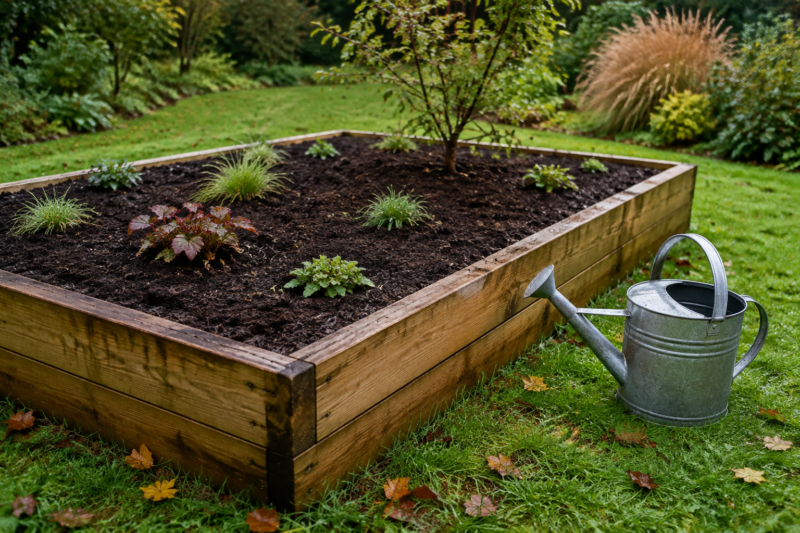
Cover takes several forms. Leaf mould, wormcast, a coir mulch mat or a green manure all intercept rain before it reaches bare ground.
The honest trade-off: a covered garden looks less tidy in November and behaves better in March. For the technique in full, our October mulching and composting guide covers the method.
Week 1, 1 to 7 October: The Deadline Week
The most time-sensitive job of the month sits right at the start. Nemasys Leatherjacket Nematodes need soil above 12°C and our own product guidance puts the practical cut-off around mid October. Miss it and you wait a full year.
Soft, spongy lawn patches or starlings probing the turf are your signs.
Plant garlic this week. The roots establish before the cold arrives. The bulbs need a cold period too. October is the ideal month rather than a compromise.
Lift squashes and pumpkins before the first frost, then cure them for two weeks somewhere dry and frost-free. A shed shelf works.
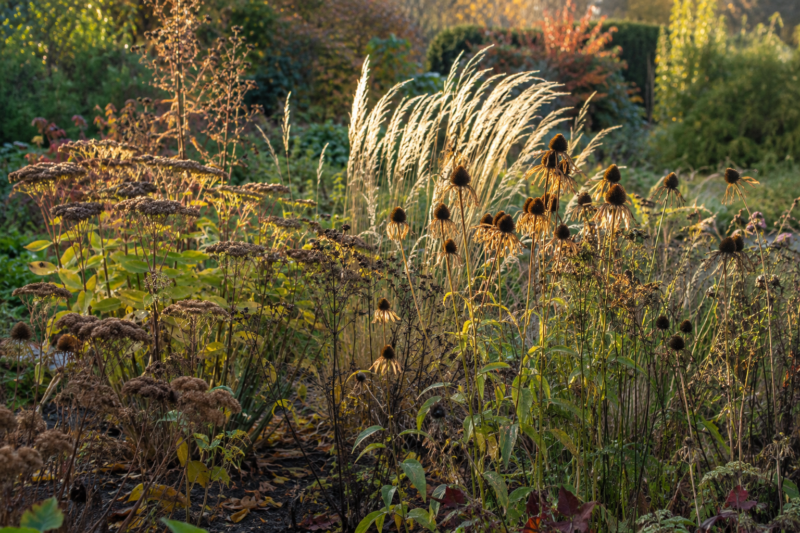
Stop deadheading from this point. Seedheads standing through frost feed finches and shelter overwintering insects. They also look better in a hoarfrost than a bare stem does.
Week 2, 8 to 14 October: Start The Leaf Pile
Rake leaves in batches as they fall rather than saving it for one grim Saturday in November. Twenty minutes a week saves hours later.
Keep bulk leaves out of the main compost heap. Leaf mould is a different biological process with a different cast of organisms and it wants its own quiet, undisturbed pile. A wire cage in a corner is all it needs.
This is your last realistic window for lawn nematodes. Top dress tired beds with biohumus wormcompost while soil biology is still active enough to draw it downwards.
Bring tender plants under cover before nights approach freezing. The damage happens faster than most gardeners expect.
Week 3, 15 to 21 October: Cut Back Less Than You Think
The instinct now is to cut everything back hard and feel productive. Resist it. Cut only what is diseased, collapsing or blocking a path.
Divide overgrown perennials while the soil is still workable. Division now gives new sections time to settle before the ground freezes.
Clean the greenhouse glass. Every hour of October light is worth having and a dirty pane costs you a slice.
Lift and store dahlias in the Midlands, the north or Scotland. A heavy mulch over the crown usually suffices in mild south-western and coastal areas. If unsure, lift them, because a lifted dahlia that did not need lifting costs nothing.
Week 4, 22 to 31 October: Cover, Close Up, Clocks Back
The clocks go back at 2am on Sunday 25 October. Weekday evening gardening finishes for the year at that moment. Front-load the remaining weekends.
Get the mulch on now, over living soil rather than bare scraped ground. Organic coir mulch mats work well around permanent plantings, suppressing weeds through winter while feeding the soil as they break down.
Mice move into sheds and greenhouses now. Your stored bulbs are the first thing they find. An ultrasonic mouse pest controller discourages them without harming the hedgehogs moving around outside.
Check stakes, fence posts and cold frame timber before the first storms. Leave one pile of leaves and loose logs in a quiet corner and do not touch it. That is overwintering habitat for the ground beetles and lacewings that work for you in April.
What Not To Do In October
Do not plant tulips yet. They want colder ground than October offers. Planting early raises the risk of tulip fire. November suits most of the UK.
Do not dig over empty beds and leave them bare. Exposed soil under autumn rain loses structure and nutrients. Our no dig gardening guide explains why this matters well beyond October.
Do not compost diseased foliage. Potato blight, rose black spot and allium rust all survive a heap that never runs properly hot. Bag it for council collection or burn it where permitted.
Do not feed the lawn high-nitrogen fertiliser. Soft lush growth heading into frost is the wrong outcome. Aeration, top dressing and nematodes are the October treatments.
The Myth Worth Busting
A tidy autumn garden is not a well-managed one. Tidiness in October is mostly aesthetic and spring collects the bill: compacted soil, beds that take longer to warm and fewer insects working for you from March.
Frequently Asked Questions
When is the first frost in the UK?
The regional range is wide enough that no national date helps. Parts of the Scottish Highlands see ground frost from late October while mild coastal areas may wait until December. Check the long-term averages for your nearest station and plan around that.
Should I dig over my vegetable beds in October?
No. Cover them. Digging now exposes soil biology to rain and cold, breaks fungal networks and compacts the structure when it is most vulnerable.
Is it too late to plant garlic in October?
October is the ideal month across most of the UK. The cloves need to root before the ground freezes and benefit from a cold period to develop properly.
Can I still use nematodes in October?
Yes, with timing caveats. Leatherjacket nematodes want soil above 12°C. The first fortnight is your window. Vine weevil nematodes tolerate slightly cooler soil and stretch a little later into the month.
Your October In One Line
Cover it, plant the garlic, treat the lawn while you still can and let the rest of it stand.
Three things earn their place this month: Nemasys Leatherjacket Nematodes before the temperature window shuts, organic coir mulch mats for beds facing a wet winter and biohumus wormcompost while the soil is warm enough to use it. October gardening jobs in the UK reward the gardener who protects rather than tidies, because the soil you go into winter with is the soil you come out of it with in March.
< Back to all posts