

September gardening jobs are the ones most people underestimate. That costs them six months. Summer’s productive chaos is winding down, but the work has changed character rather than stopped. Everything you do now determines how your garden performs next spring.
Why September Is the Most Consequential Month in the Garden
Most gardeners treat September as a wind-down. In reality, the soil is still warm from summer, pest populations are building, spring bulb stock is disappearing from shelves and there is a closing window for sowing, dividing and treating that will not reopen until next year. Miss it and you spend the following season catching up. Use it well and the garden practically runs itself through spring.
The four weeks of September each carry distinct priorities, covering pest control, harvest, soil health, lawn restoration and forward planting in a logical order that leaves nothing behind.
Week 1 (1 to 7 September): Nematodes, Bulbs and Soil
This first week is the single most critical moment for biological pest control all year. Slug populations build fast as temperatures drop and rain arrives, while the soil is still warm enough for nematodes to work at full effectiveness. Apply Nemaslug 2.0 now: once soil temperatures drop below 5°C, activity falls away sharply.
The vine weevil second application window also opens this week: larvae from late summer eggs are still small, near the surface and at their most vulnerable. Treating now catches them before they burrow deeper. If you treated in August, this follow-up significantly increases control. Apply vine weevil nematodes this week for that window.
Leatherjacket nematodes deserve a mention too: September and October is the only reliable treatment window for these crane fly larvae. Unexplained bare lawn patches this year are almost certainly their doing. Leatherjacket nematode treatment now saves months of repair work in spring.
Order spring bulbs immediately if you have not already. Alliums, narcissi and species tulips sell out early; tulips plant in October and November, but order now.
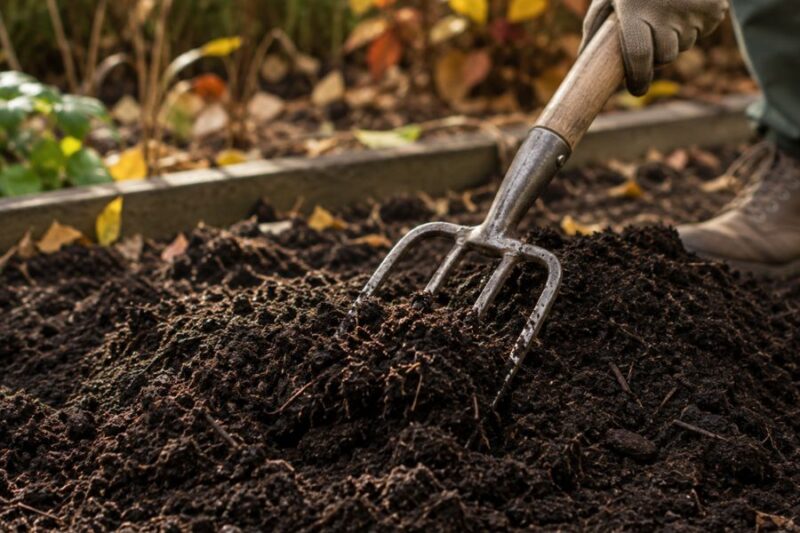
On cleared beds, work in Biohumus Wormcompost and biochar while the soil holds summer warmth. Amendments added now break down over winter and are available to roots by the time spring growth begins, a job November does not do as well.
Week 2 (8 to 14 September): Harvest the Last, Plant for Winter
Tomatoes still on the vine by the end of this week are unlikely to ripen outdoors. Bring green fruits inside and place them on a windowsill with a ripe banana; the ethylene gas does the rest, reliably and without waste.
Lift maincrop potatoes on a dry day. Cure them in a single layer for two weeks, then move to hessian or paper sacks somewhere cool and dark. Plastic bags cause rot; air and darkness keep them well into winter.
Garlic and overwintering onion sets go in now. September planting gives the longest possible establishment period before the ground hardens, which means stronger, larger bulbs at harvest. If you want to understand how companion planting can work alongside your garlic bed, plan it while you prepare the ground.
This week also suits dividing finished perennials: hostas, hemerocallis, geraniums and achillea all respond well, with a full autumn to settle before frost. Take hardwood rose cuttings too; they cost nothing and overwinter ready to plant out next spring.
Week 3 (15 to 21 September): Cut Back, Clear and Feed the Soil
Cut back perennials that have fully finished, but resist the urge to tidy everything. Leave seedheads on rudbeckia, echinacea, verbena bonariensis and fennel: birds feed on them through winter and they add real structural interest to a frost-covered garden. The guide to supporting wildlife in late summer gardens covers the autumn transition in more detail.
Clear spent vegetable crops onto the compost heap; brassica and legume roots can stay, since they fix nitrogen that benefits the next crop.
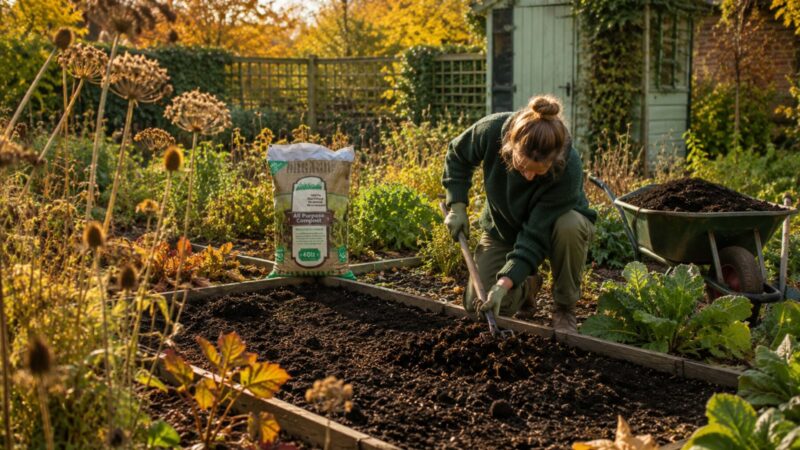
Top dress cleared beds with wormcompost and biochar before rain compacts the bare surface. This is the last warm-soil window of the year: anything added now breaks down slowly and is active by March. Bare soil left exposed loses organic matter and invites weeds, which is why the no-dig approach of dressing the surface rather than digging in keeps structure intact.
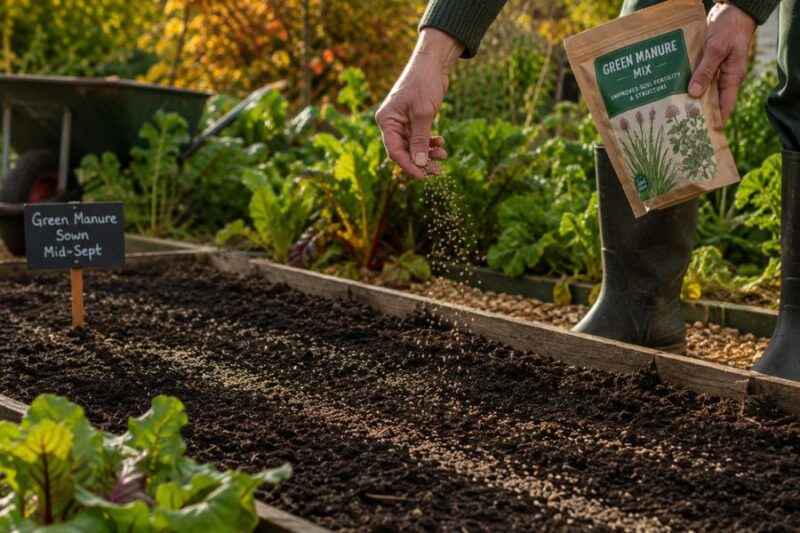
Sow green manures on any ground sitting empty over winter. Phacelia, mustard and winter field beans feed the soil, protect the surface and suppress weeds for the cost of the seed. Pot up tender plants coming inside before the first frost: pelargoniums, fuchsias and dahlias all need to be in before temperatures hit zero.
Week 4 (22 to 30 September): Lawns, Bulbs and Looking Ahead
September Lawn Care: What Actually Needs Doing
September is the most important month for lawn recovery. Scarify to remove summer thatch, then aerate with a garden fork or hollow-tine aerator to relieve compaction. Overseed bare patches while soil temperature is still above 10°C; that germination window closes fast as October arrives.
Follow with an autumn feed using a low-nitrogen formula: high nitrogen now pushes soft growth vulnerable to frost, while low nitrogen with higher potassium hardens grass for winter and supports roots instead. The guide on rewilding your lawn offers a useful perspective on balancing lawn health with wider ecological value.
Bulbs, Seeds and Forward Planning
Plant alliums and narcissi now rather than waiting for October: every week of delay costs root development. Scatter British meadow wildflower seeds into bare patches too. Autumn sowing frequently outperforms spring because cold stratification over winter improves germination, as the piece on rewilding and letting nature lead explains.
Collect seeds from sweet peas, poppies, aquilegia and foxgloves before the last of them drop. Store in paper envelopes somewhere cool and dry, labelled immediately while you still know what is what.
Spend the final days of September reviewing the season honestly: what worked, what failed, where the gaps were. Done now while the detail is fresh, this saves real frustration come January. The October gardening guide on mulching and composting picks up directly from where this month ends.
Frequently Asked Questions About September Gardening Jobs
What is the most important gardening job in September?
Applying slug and vine weevil nematodes. Soil temperature and pest vulnerability align in a narrow window during early September; missing it costs you the most effective biological control opportunity of the year.
Can I still plant bulbs in September?
Alliums and narcissi should go in during September for best results. Tulips plant in October and November, but order them now before stock sells out. The earlier alliums and narcissi go in, the stronger their root systems will be before winter.
Should I cut back my garden completely in September?
No. Cut back perennials that have fully finished, but leave seedheads on plants like rudbeckia, echinacea and verbena bonariensis: they feed birds through winter and add structural interest. A fully tidied autumn garden is a less useful one ecologically.
When should I scarify and overseed my lawn?
The last week of September is ideal. Soil is still warm enough for new seed to germinate before temperatures drop. Scarify first, aerate, then overseed and feed with an autumn low-nitrogen formula.
September rewards planning more than any other month in the gardening year. The work you put in now is next spring already taking shape. The gardeners who understand that are the ones whose gardens feel effortless in March.
< Back to all posts