

What are nematodes in gardening? They are microscopic, naturally occurring roundworms already living in your soil right now and in September they become one of the most effective pest control tools you can use.
If your hostas were shredded by August, if a container collapsed overnight or if last spring’s lawn showed brown patches you never explained, you already know the shape of the problem nematodes solve.
No chemicals, no collateral damage, no compromise on your organic principles. Just nature’s own cycle, given a helping hand.
What Are Nematodes in Gardening and How Do They Work?
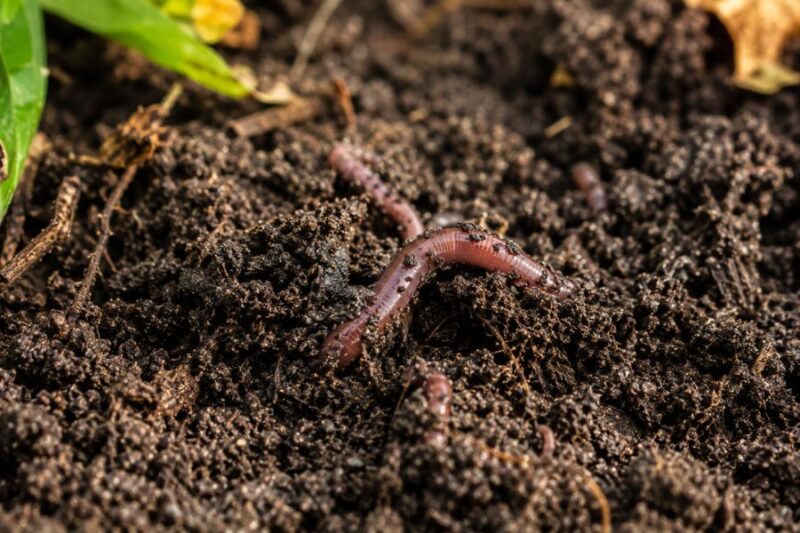
Nematodes are not a product invented in a laboratory. They exist in every teaspoon of healthy, living soil, working quietly as part of the natural food web. When you buy them for pest control, you are simply concentrating and directing a population that nature has already created.
The mechanism is precise. Pest-parasitic nematodes seek out their target host, enter it through natural body openings and release a bacterium inside. That bacterium kills the pest within a matter of days.
The nematodes then reproduce inside the dead host and move on through the soil looking for their next target. The pest dies, the nematodes multiply and the cycle continues, entirely without your involvement.
Why Nematodes Are Safe for Everything Else in Your Garden
This specificity is what makes nematodes so remarkable. Each species of pest-parasitic nematode targets one particular host. Nematodes targeting slugs will not harm earthworms, bees, hedgehogs, birds, children or pets.
They have no interest in anything beyond their intended target, which matters enormously if you’ve worked hard to create a wildlife-friendly garden. You are reinforcing the natural pest cycle, not disrupting it.
The Three Pests September Targets, and Why Timing Is Everything
Nematodes go into the ground twice a year: March to May, then September into autumn. Miss the spring window and September is your last chance before soil turns too cold. Nemaslug 2.0 and Vine Weevil Nematodes both specify a minimum soil temperature of 5°C on the pack; once autumn soil drops below that, the window closes until spring.
Slug pellets are cheaper and quicker to reach for, but metaldehyde and ferric-based pellets don’t distinguish between the slug on your hosta and the hedgehog, bird or pet that encounters it afterwards. Nematodes only ever go after the pest they’re bred for.
Slugs: Fast Results You Can Actually See
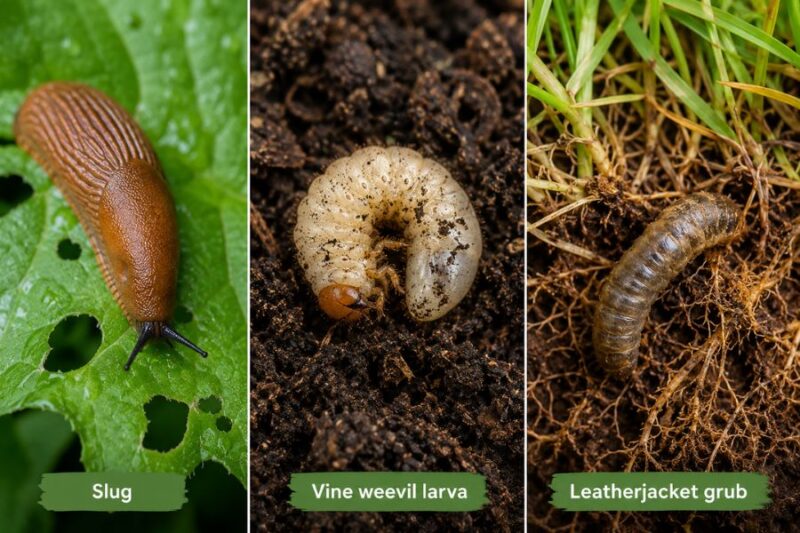
Nemaslug 2.0 targets slugs below the soil surface, where they breed and shelter. Above-ground slug damage comes from below-ground slug populations. That is where nematodes solve the problem.
Each application stays active for six weeks. Nemaslug 2.0’s own guidance is to reapply on that six-week cycle through the March-to-May and September-to-October windows for ongoing control. Affected slugs come to the surface and become visible. This can feel alarming at first, but it confirms the treatment is working.
One detail worth knowing before you order: nematodes arrive alive, need refrigerating and have a shelf life of 2 to 3 weeks. Time the order for when you’ll be in the garden, not for the week you’re on holiday.
Companion planting with pest-deterring plants alongside a nematode application gives your garden even stronger protection.
Vine Weevil Larvae: Treat Before They Take Hold
Vine weevil adults lay eggs in late summer and the larvae hatch in September. Those larvae feed on plant roots through autumn and winter, often causing plants to collapse entirely before the gardener realises the cause.
Treating in September targets the larvae while they are tiny and close to the soil surface. Vine Weevil Nematodes, applied now with a follow-up in spring, give the most comprehensive protection across the whole cycle.
Leatherjackets: The Cause of Your Lawn’s Bare Patches
Leatherjackets are crane fly larvae; gardeners commonly call the adults daddy-long-legs. Adults lay eggs in late summer. The larvae are at their most vulnerable in September and October, small and near the surface.
If you leave them untreated, they feed on grass roots through winter and the damage shows as brown, dying patches the following spring. Applying a leatherjacket nematode treatment in September disrupts that cycle before it takes hold. If your lawn has suffered unexplained bare patches in recent years, leatherjackets are the likely cause.
How to Apply Nematodes: The Practical Essentials
The application method is straightforward, but the conditions matter. Soil temperature must be above 5°C and the soil must be moist before you apply it and kept moist for at least two weeks afterwards. Apply in the early evening when the sun is off the soil, since UV light can damage nematodes.
The Watering Can Method
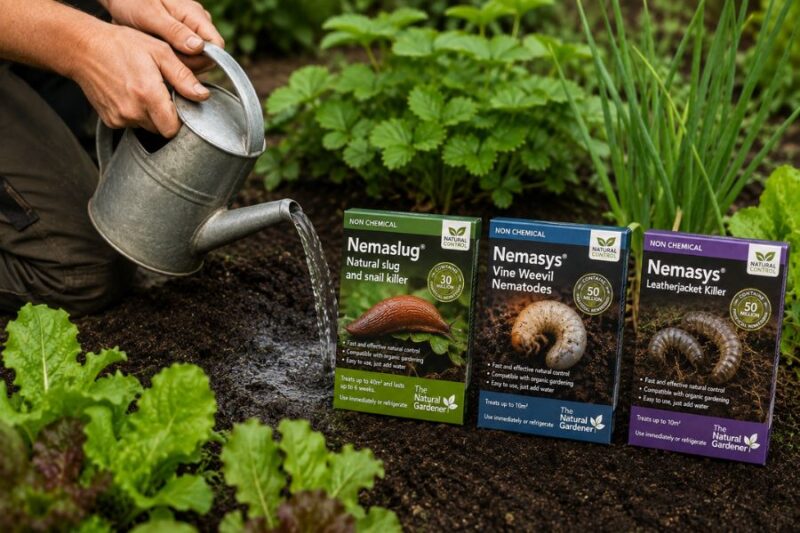
Mix the nematodes with water according to the pack instructions, then apply using a watering can with the rose removed for a steady, even spread. Coverage rates vary by product. Check the pack, then water the area well afterwards to drive the nematodes down to where the pests are active. A light mulch helps retain moisture.
The no-dig gardening guide covers the wider soil health principles that support this kind of biological approach.
Nematodes as Part of a Wider Natural Garden Approach
Nematodes work best in a garden that supports biological diversity rather than fighting against it. Encouraging natural predators, such as hedgehogs, ground beetles and birds, adds further layers of pest control. This is the principle behind rewilding your garden and nematodes fit that thinking precisely: you are reinforcing nature’s system, not replacing it.
Well-structured soil also makes nematodes more effective, giving them the damp, friable environment they need to hunt. Organic compost and fertilisers applied through autumn support both the nematodes you add and the native populations already present, at different scales of the same principle.
For the rest of the month’s tasks, the September gardening jobs guide sets out the full list, with nematode applications fitting naturally alongside them.
Frequently Asked Questions
How quickly do nematodes work against slugs?
Each Nemaslug 2.0 application stays active for six weeks. Affected slugs move to the surface within that window, which confirms the nematodes are doing their job.
Do nematodes harm earthworms or beneficial insects?
No. Each pest-parasitic nematode species targets a specific host. Nematodes sold for slug, vine weevil or leatherjacket control have no effect on earthworms, bees, ground beetles or any other beneficial garden creature.
Can I apply nematodes in autumn?
Yes, provided soil temperature is above the 5°C minimum on the pack. September and October are the second of the two yearly windows, the one before soil turns too cold until spring.
How often do I need to apply nematodes?
Every six weeks during an active window: March to May, then September to October, with vine weevil’s window running to November. Order for when you’ll use it, not for a week you’re away, since nematodes arrive live.
Treat Your Garden This September
What are nematodes in gardening? They are the answer to three of the most damaging autumn pests, delivered entirely naturally, safely and in line with how healthy soil already works.
September is your second window this year. Start with Nemaslug 2.0: the fastest result you’ll see and the clearest sign the whole approach is working.
< Back to all posts