

How to get rid of slugs organically is one of the most searched questions in British gardening and unfortunately, most of the answers circulating online are wrong. Eggshells, copper tape, coffee grounds: well-intentioned, widely shared and largely ineffective. If you have been gardening for more than a decade, you already suspect this. This guide is written for you.
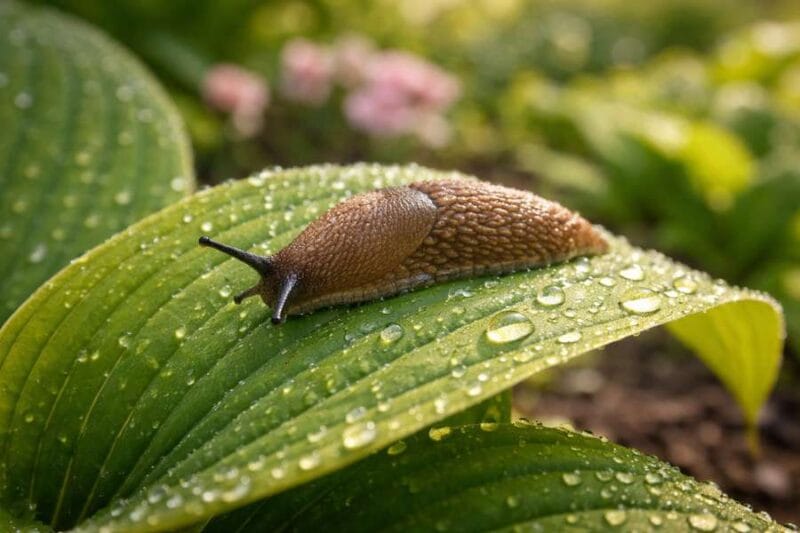
Why Most Natural Slug Advice Doesn’t Work
Let’s address the myths directly, because experienced gardeners deserve honesty rather than recycled folklore.
Eggshells do not deter slugs in any meaningful way. Slugs produce a protective mucus that allows them to cross sharp surfaces with ease, laboratory observations confirm this repeatedly and any gardener who has watched a slug glide over gravel will not be surprised. Copper tape produces a mild galvanic reaction in controlled conditions, but in a real garden, with rain, soil contact and oxidisation, the effect degrades rapidly. Coffee grounds acidify the soil and may have a marginal deterrent effect at very high concentrations, but the volumes required are impractical and the results inconsistent.
The problem is not that people are careless. The problem is that these remedies feel intuitive and slugs are persistent enough that confirmation bias does the rest. You scatter eggshells, the slugs go elsewhere for a night, and the method gets credited. However, the slugs return.
What actually works is rooted in biology, not folklore.
How to Get Rid of Slugs Organically: The Methods That Genuinely Work
Slug Nematodes: The Most Effective Organic Control Available
Nemaslug 2.0 is, without question, the most effective organic slug control on the market for UK gardeners. It contains Phasmarhabditis hermaphrodita, a naturally occurring microscopic nematode that seeks out slugs in the soil, infects them with bacteria and kills them underground, before they reach your plants. The damage happens beneath the surface, where most slug feeding and breeding occurs.
This is an important point that many gardeners overlook. The slugs you see on the surface at night are a fraction of the population. Research published by the Royal Horticultural Society estimates that up to 95% of the UK slug population lives underground at any given time. Surface deterrents, however appealing, address only a small part of the problem.
Nematodes are applied as a soil drench, mixed with water and watered directly into the ground. Soil temperature needs to be above 5°C for the nematodes to be active, so application timing matters. In the UK, that typically means March through to October, with spring and autumn being the highest-risk periods. One application provides protection for approximately six weeks and repeat treatments extend that cover through the season.

Neem Oil: A Versatile Organic Tool With Real Slug-Deterrent Properties
Organic neem oil is extracted from the seeds of the Azadirachta indica tree and has a well-established record in organic horticulture. Its primary active compound, azadirachtin, disrupts the feeding behaviour and development of many invertebrate pests. As a slug deterrent, it works differently to nematodes, it does not kill slugs directly, but it disrupts their appetite and creates a hostile surface environment that slugs actively avoid.
Applied as a foliar spray or soil drench around vulnerable plants, neem oil also delivers a secondary benefit: it supports soil microbial health rather than depleting it. This matters if you are working to build a genuinely resilient garden ecosystem, rather than simply managing individual pest events. For a full breakdown of application rates and timing, the guide to using neem oil in the garden on The Natural Gardener site is worth reading thoroughly.
Used alongside nematodes, neem oil forms part of a layered defence, one working in the soil, one working at the surface. This combination approach is considerably more effective than either method in isolation.
Building a Garden That’s Naturally More Resilient to Slugs
Soil Health Is Slug Control
This is the insight that separates experienced gardeners from reactive ones: a well-structured, biologically active soil creates conditions that are inherently less hospitable to slugs. Dense, compacted soil with low organic activity is prime slug territory. An open, well-aerated soil with a thriving microbial community, including beneficial fungi, supports the predator populations that naturally regulate slug numbers.
Mycorrhizal fungi play a significant role in this ecosystem. They extend plant root systems, improve nutrient uptake and increase plant resilience to stress including pest pressure. A plant with a robust root system recovers faster from slug damage and is less likely to be fatally affected. Understanding the benefits of mycorrhizal fungi in your soil goes well beyond slug control, but it is directly relevant to building a garden that bounces back.
Encouraging Natural Predators
Hedgehogs, ground beetles, slow worms and song thrushes are the UK’s most effective natural slug controllers. Providing habitat for these species — log piles, beetle banks, undisturbed areas of long grass which creates a sustainable, long-term check on slug populations. This is not a quick fix, but it is how healthy gardens remain healthy without constant intervention.
French marigolds (Tagetes) also have a supporting role. Their scent acts as a deterrent for a range of soil pests, and planting them as a companion around brassicas, lettuce and strawberries is a genuinely useful strategy, unlike many companion planting claims, this one has reasonable supporting evidence. The Natural Gardener stocks French marigold seeds specifically for this purpose.

When to Act and What to Prioritise
Slug pressure peaks in spring and again in early autumn. A single female slug can lay up to 300 eggs per year, so getting ahead of the population in March, before egg-laying accelerates — makes a measurable difference to the rest of the growing season. Apply nematodes early, combine with neem oil around your most vulnerable crops and support soil health throughout with organic matter and mycorrhizal inoculants.
Reactive treatment after significant damage is always less effective than timely prevention. Experienced gardeners know this, of course but even experienced gardeners can underestimate how quickly slug populations rebuild after a mild winter.
Frequently Asked Questions
Do slug pellets harm wildlife?
Conventional metaldehyde slug pellets have been banned in the UK since 2022 due to their toxicity to wildlife, particularly hedgehogs and birds. Ferric phosphate pellets are less harmful but still carry some risk. For a genuinely wildlife-safe approach, biological controls such as nematodes are the most responsible choice.
How quickly do slug nematodes work?
Nematodes typically begin killing slugs within 48 hours of application, though the full effect on a population builds over two to three weeks. You may not see a dramatic overnight change, but slug damage to plants should reduce noticeably within that window.
Can I use neem oil on edible plants?
Yes. Neem oil is approved for use on food crops in organic growing systems. It degrades rapidly in sunlight and does not persist in the soil, which makes it suitable for use on vegetables and herbs. Always follow the product dilution guidelines and apply in the early morning or evening to avoid leaf scorch.
What is the best time of year to apply slug nematodes in the UK?
The optimal windows are March to May and August to October. Soil temperature must be above 5°C for nematodes to be effective. Autumn treatment is particularly valuable because it targets the egg-laying generation before it overwinters.
If you are serious about tackling slugs without compromise, knowing how to get rid of slugs organically starts with rejecting the myths and investing in methods that the science supports. Nemaslug 2.0 and organic neem oil form the core of any honest, effective organic slug programme and The Natural Gardener stocks both, alongside everything else you need to build a genuinely resilient garden from the soil up.
< Back to all posts