

May gardening jobs separate the gardeners who react from the gardeners who plan. This is the month where timing is everything to the last frost threshold, the Chelsea Chop, succession sowing and a pest population that doubles while you are looking the other way.
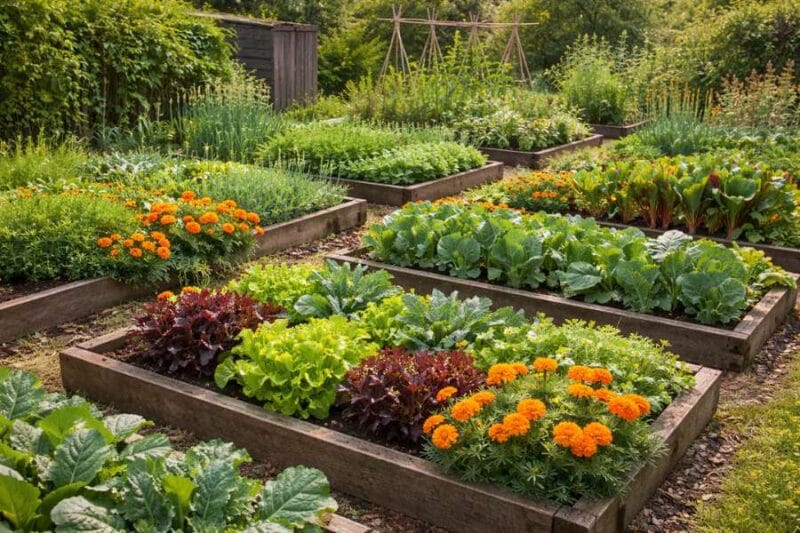
May is not simply ‘spring is here’. It is a crossover month which means one foot still in the risk of a late frost, the other stepping into the heat and momentum of early summer. Get the sequencing right and your garden will carry you through to October. Miss the window and you spend the rest of the season catching up.
This guide gives you four weeks of precise, ordered tasks built for experienced gardeners who know the principles and want to act at exactly the right moment.
May Gardening Jobs, Week by Week
Week One (1st–7th May): Hold Your Nerve on the Last Frost
The Met Office records show that the UK’s average last frost date ranges from late April in the south to mid-May in northern and upland areas. Do not let a warm spell in late April trick you. A single sharp frost in the first week of May can set back tender plants by three weeks.
This week, focus on what you can do under cover. Pot up tomatoes, cucumbers, courgettes and squash into larger containers but keep them in the greenhouse or polytunnel until night temperatures are consistently above 10°C. Harden off brassicas, leeks and any overwintered alliums by moving them outside during the day and bringing them back in at night.
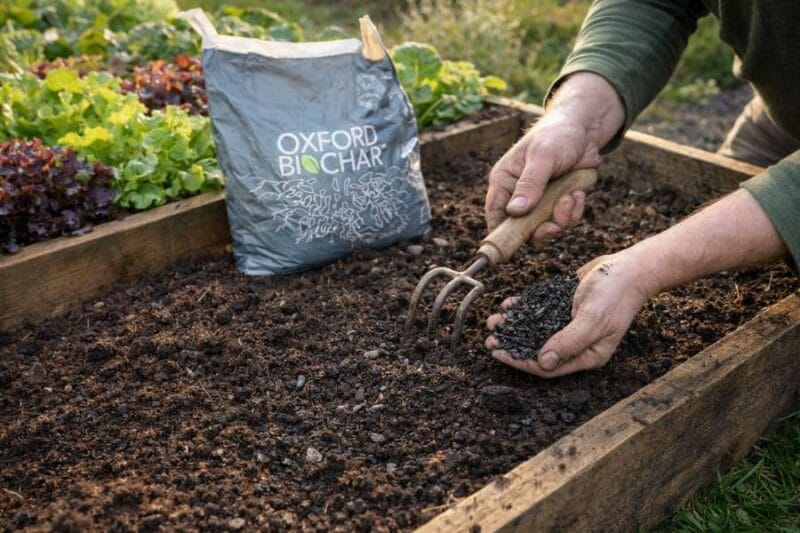
On the soil, this is an excellent week to apply biochar to your beds. Biochar improves water retention and microbial activity, which pays dividends the moment you transplant into warming soil. Combine it with vermicompost soil extract to give your soil biology a genuine boost before the main planting rush begins.
Week Two (8th–14th May): Plant Out and Protect
By the second week of May, most gardeners in England and Wales can begin planting out tender crops with confidence, though a fleece on standby remains sensible. In Scotland and exposed northern gardens, wait until the third week.
Plant out French beans, runner beans and sweetcorn in blocks rather than rows, they pollinate more reliably that way. Direct sow courgette and squash into their final positions if the soil temperature has reached 12°C.
This is also the week pest pressure starts to build seriously. Aphids colonise new growth fast in warm weather, and vine weevil adults emerge to begin laying eggs in container compost. Address both proactively rather than reactively. Aphid natural pest controllers introduce beneficial predators that work with the garden’s ecology rather than against it. For container plants and raised beds, vine weevil nematodes applied now will intercept larvae before they cause root damage.
Slugs are active and hungry in May. Nemaslug 2.0 is a biological control that works in the soil, targeting slugs without harming hedgehogs, birds or ground beetles. Apply when the soil is moist and above 5°C, both conditions are typically met by mid-May.
Week Three (15th–21st May): The Chelsea Chop
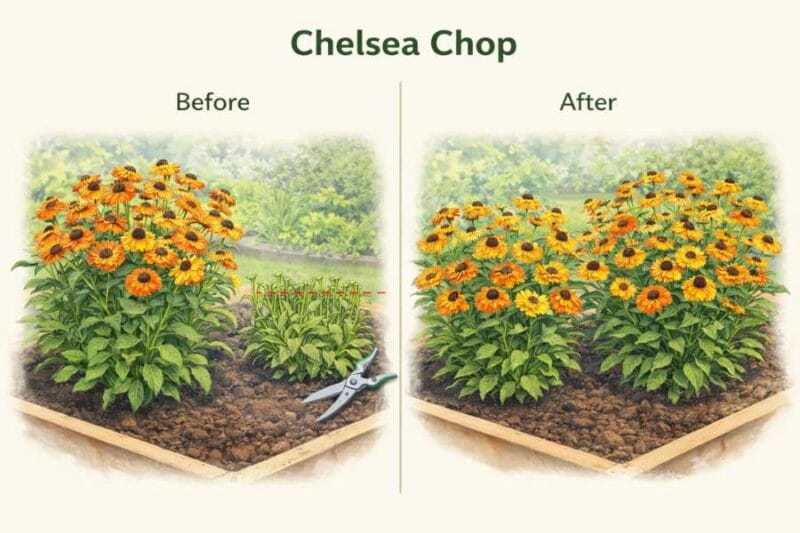
The Chelsea Chop takes its name from Chelsea Flower Show week, which falls around the third week of May. The technique involves cutting back certain late-summer perennials by up to a third, which delays flowering, promotes bushier growth and extends the overall display period.
Candidates for the Chelsea Chop include sedum, echinacea, helenium, rudbeckia, phlox and asters. You can chop the entire plant for a single later display, or chop half the stems and leave half, this staggers flowering across several weeks and is particularly effective with helenium and rudbeckia.
This is not a technique for all perennials. Do not apply it to spring-flowering plants, anything already in bud, or ornamental grasses. Apply it with confidence to the right plants and the results are significant, both in terms of structure and longevity of flowering.
This week also suits a feed of seaweed granules around permanent plantings — roses, perennial borders and soft fruit. Seaweed is a slow-release source of trace elements that supports strong cell wall development, which in turn improves a plant’s natural resistance to pest and disease pressure.
Week Four (22nd–31st May): Succession Sowing and Getting Ahead
Succession sowing is one of the most effective techniques an experienced kitchen gardener can use, yet it is the one most often abandoned by the end of May when enthusiasm gives way to the illusion that the season is sorted. It is not.
Sow a new batch of lettuce, radish, rocket and beetroot now, even if you sowed them in March. The first sowings will be bolting or harvested by July. These late-May sowings will give you a productive July and August without a gap. Sow salad leaves in partial shade for best results as temperatures climb.
This is also the moment to sow French marigolds between your vegetable rows. French marigold seeds are a practical companion plant, not just a pretty one — they deter whitefly, attract hoverflies and when planted near tomatoes, have demonstrated measurable reductions in aphid populations. Tagetes also produce a root exudate that suppresses certain soil nematodes.
Neem oil earns its place in the May toolkit. It acts as a broad-spectrum organic pest deterrent — effective against aphids, whitefly, thrips and spider mite without harming beneficial insects when applied correctly. If you are new to it, our guide on what neem oil is and how to use it gives you the full picture. Apply in the early morning or evening to avoid direct sun contact on leaves.
What Are the Most Important May Gardening Jobs for Soil Health?
Experienced gardeners know that visible results above ground depend entirely on what is happening below it. May is the ideal month to introduce mycorrhizal fungi. If you don’t know what that is, now is the time to understand What is Mycorrhizal fungi?. Applied directly to roots or the planting hole, they extend the effective root system and improve uptake of water and phosphorus. This matters most during the establishment phase, which for most tender crops falls squarely in May.
Biohumus wormcompost worked into planting holes delivers a concentration of microbial life and plant-available nutrients precisely where transplants need it most. Used alongside a quality organic compost, it creates the kind of soil conditions that reduce the need for intervention throughout the season.
Frequently Asked Questions
What jobs should I do in the garden in May?
May calls for planting out tender crops after the last frost risk passes, applying the Chelsea Chop to late-summer perennials, starting succession sowing of salads and vegetables and managing rising aphid, slug and vine weevil pressure using biological controls. Soil preparation with organic amendments pays significant dividends throughout the coming season.
When is it safe to plant out tender plants in May?
In most of England and Wales, the third week of May is considered reliably safe for planting out tender crops such as tomatoes, courgettes and beans. In Scotland and northern upland areas, wait until late May or early June. Always check overnight temperatures, anything below 10°C warrants caution for the most tender plants.
What is the Chelsea Chop and when should I do it?
The Chelsea Chop is a pruning technique applied to certain late-summer perennials, including sedum, echinacea, helenium and rudbeckia, during Chelsea Flower Show week, typically the third week of May. Cutting plants back by a third delays flowering, encourages bushier growth and extends the display period. Chopping only half the stems on each plant staggers flowering even further.
How do I control slugs organically in May?
Biological slug control using nematodes, specifically products such as Nemaslug, offers effective, targeted control that leaves wildlife unharmed. Apply to moist soil above 5°C, which is typically achievable from mid-May onwards in most UK regions. Companion planting with French marigolds and ensuring good soil drainage also reduce slug habitat and damage.
May gardening jobs reward precision above all else. The gardeners who act in the right week, not simply when the mood strikes — are the ones who harvest abundantly, spend less time firefighting pests and carry genuinely healthy soil into winter. Browse the full range of organic and natural gardening products at The Natural Gardener to make sure you have everything you need before the season accelerates past you.
< Back to all posts